


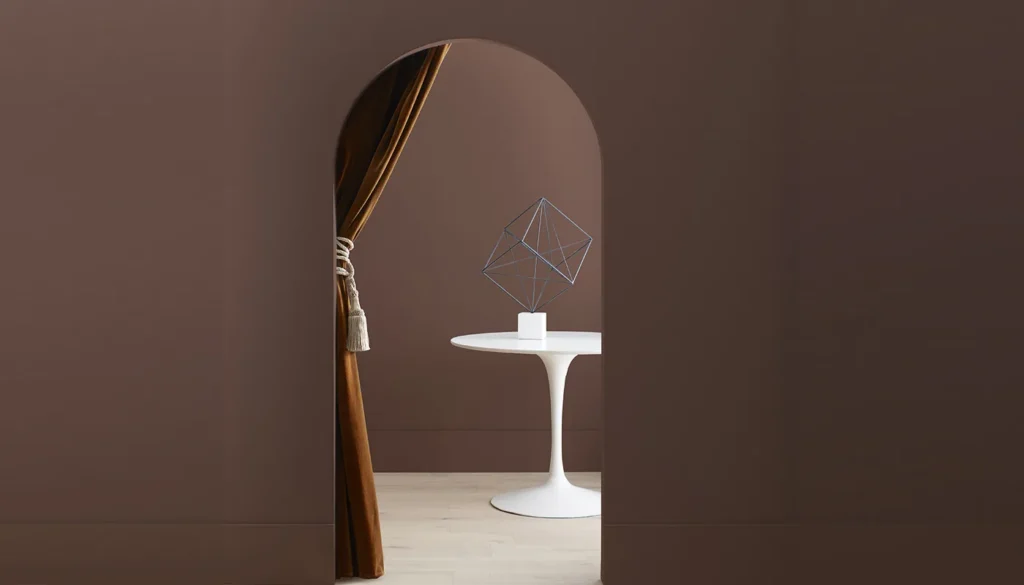
Hasbrouck Brown HC-71 is a deep mahogany brown from Benjamin Moore with red undertones. It comes from the Historical Collection, and it is a dark color.
But here is what the paint chip won’t tell you. This brown bounces back less than 10% of the light that hits it. So the same can of paint can look like warm chocolate in one room and close to black in the next.
Below, you’ll see what Hasbrouck Brown really looks like, where it works, what to pair it with, and how to test it before you buy a gallon.
Hasbrouck Brown HC-71 Color Facts
Hasbrouck Brown
HC-71
- Brand
- Benjamin Moore
- Collection
- Historical Colors
- LRV
- 9.56
- Undertone
- Red
- Hex code
- #654C43
- Use
- Interior and exterior
These numbers come from Benjamin Moore’s Hasbrouck Brown color page. A screen can only get close, so treat the swatch above as a preview, not a match.
What Color Is Hasbrouck Brown?
Benjamin Moore calls it a “sumptuous mahogany.” Think of a polished wood table. It is brown first, with a soft red glow under it.
That red is what keeps it from looking flat or muddy. It is not a gray brown, and it is not a tan.
Light changes it a lot:
- Warm light. Lamps and late day sun pull the red forward, so the wall looks richer and warmer.
- Cool light. In a north facing room, the red goes quiet and the color reads as a deep, dark chocolate.
- Low light. At night with one lamp on, it can pass for black.
If you want a mahogany paint color for your home, put this one on your sample list. Just know how dark it is first.
How Dark Is Hasbrouck Brown? Its LRV Is 9.56
LRV stands for Light Reflectance Value. It tells you how much light a color bounces back. The scale runs from 0, which is pure black, to 100, which is pure white.
Hasbrouck Brown sits at 9.56, near the dark end.
So this color soaks up light. That is why people love it, and it is also where it can go wrong. Here is the honest list:
- It makes a room feel smaller. Dark walls pull in. That is cozy in a den and tight in a narrow hallway.
- It shows more. Dust, scuffs and touch up spots stand out more on dark paint than on light paint.
- It can take an extra coat. Going from a white wall to a deep brown is a big jump.
None of that is a reason to skip it. It just means the room matters.
Where Hasbrouck Brown Works Best
Pick a spot where dark is the point. These are the places it fits:
- Front doors. Benjamin Moore tags this color for front doors. A brown front door in this shade looks like rich stained wood from the street.
- Siding, shutters and trim. It is listed as an exterior color, and daylight shows off the red in it.
- Dens, dining rooms and bedrooms. These are rooms you use at night, so a dark brown wall feels warm instead of gloomy.
- One wall, built ins or cabinets. You get the depth without giving up all the light in the room.
Painting vinyl siding? Dark colors soak up heat, and some vinyl can warp under them. Ask us before you buy, or start with our colors made to be safe on vinyl siding.
Colors That Go With Hasbrouck Brown
A brown this dark needs something light next to it. Benjamin Moore pairs Hasbrouck Brown with four colors: two soft grays and two warm tans.
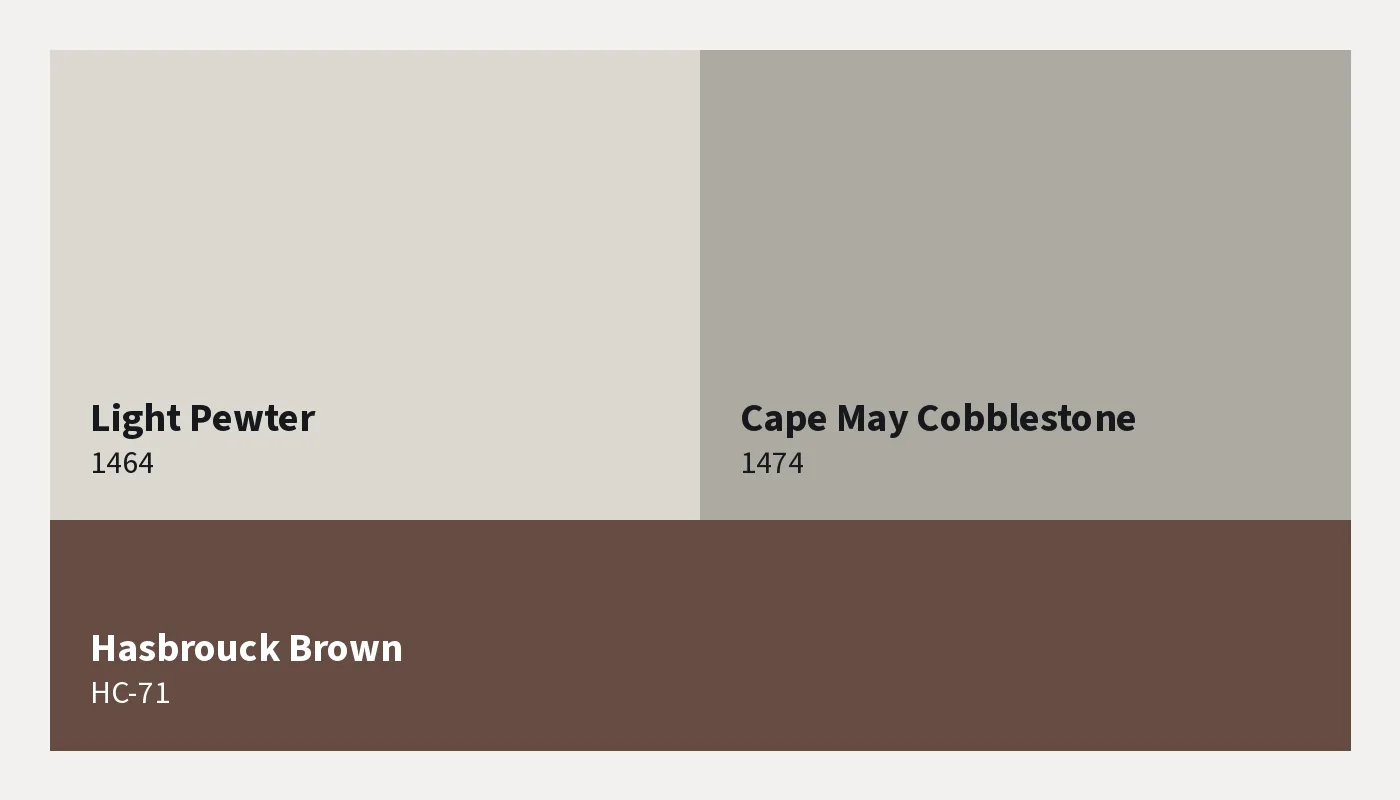
Want a calm, modern look? Use the grays. Want the room to feel warm from top to bottom? Go with the tans.
Want It Lighter or Darker?
You may love the color but need more light in the room. Benjamin Moore shows these six shades with Hasbrouck Brown. Five are lighter. Chocolate Sundae is the one that goes darker.
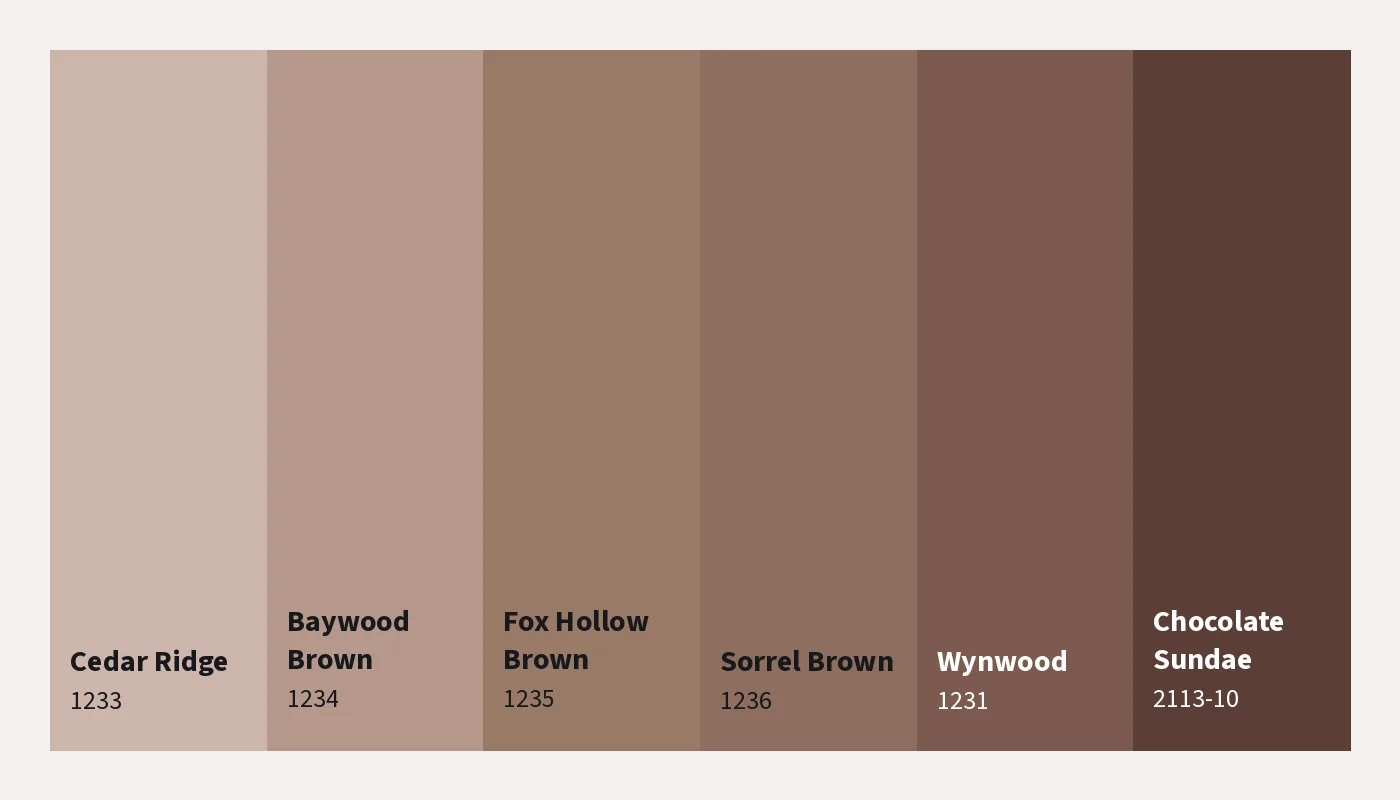
- Cedar Ridge1233
- Baywood Brown1234
- Fox Hollow Brown1235
- Sorrel Brown1236
- Wynwood1231
- Chocolate Sundae2113-10
Which Paint and Sheen Should You Pick?
The color is the same in every can. The paint and the sheen change how it looks and how it holds up. Match them to the job:
- Walls. Choose matte or eggshell. A low sheen hides bumps and patches, which dark colors tend to show.
- Doors, trim and cabinets. Choose ADVANCE in satin or semi-gloss. It is made for these surfaces, and a shinier finish is easier to wipe clean.
- Front doors and siding. Choose an exterior paint, such as Aura Exterior or REGAL Select Exterior.
- Decks and wood siding. We can tint ARBORCOAT solid stain to Hasbrouck Brown too.
Painting over bare wood, a glossy door or a much lighter color? Ask us if you need one of our Benjamin Moore primers first. The right one helps a dark color cover evenly.
Try Hasbrouck Brown on Your Own Wall First
Don’t pick a color this dark from a screen. Order a half pint sample, brush on two coats, and look at it in the morning, at noon and at night with the lamps on.
If it still looks right after dark, you’ve found your brown.
Order Hasbrouck Brown HC-71 online, or bring a photo of your room to any of our five Rhode Island stores and we’ll pull chips that work with your light.
Frequently Asked Questions
What color is Benjamin Moore Hasbrouck Brown HC-71?
Hasbrouck Brown HC-71 is a dark mahogany brown with red undertones. It is part of the Benjamin Moore Historical Collection. In warm light it looks like rich, reddish wood. In cool or low light it reads as a deep chocolate that can look close to black.
What is the LRV of Hasbrouck Brown?
Hasbrouck Brown has an LRV of 9.56. LRV runs from 0 for black to 100 for white, so this color reflects less than 10% of the light that hits it. Plan on good lighting, or use it in a room where you want a dark, cozy feel.
What colors go with Hasbrouck Brown HC-71?
Benjamin Moore pairs Hasbrouck Brown with Light Pewter 1464, Cape May Cobblestone 1474, Shaker Beige HC-45 and Lenox Tan HC-44. The two grays give a calm, modern look. The two tans keep the whole room warm.
Is Hasbrouck Brown a good color for a front door or exterior?
Yes. Benjamin Moore lists Hasbrouck Brown as an exterior color and tags it for front doors. Use an exterior paint for doors, siding and trim. If you have vinyl siding, ask us first, because dark colors hold heat and some vinyl can warp. You can order Hasbrouck Brown HC-71 online in interior and exterior paints.