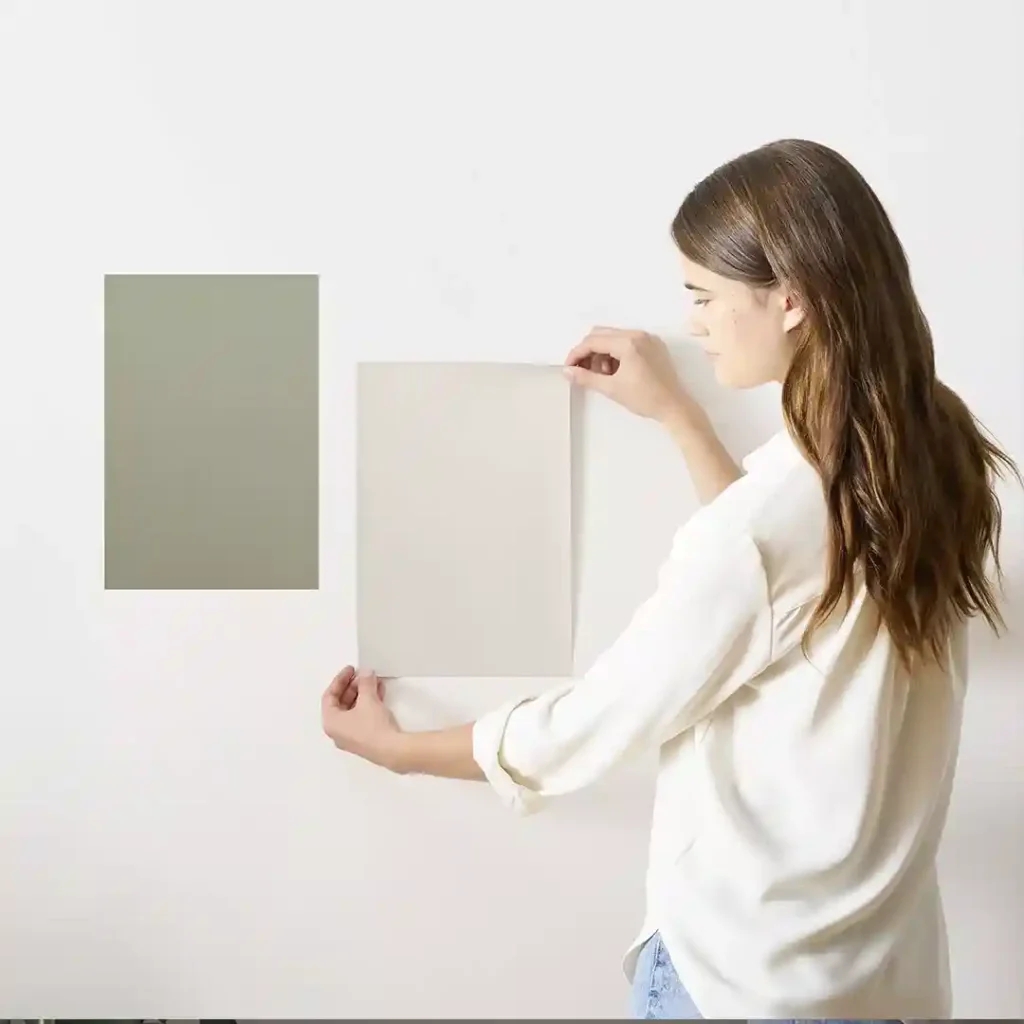
Why Getting a Room Color Sample Right Can Save You Time, Money, and Stress
A room color sample is the single best tool you have before committing to a full paint job. Here are the main ways to get one:
| Sample Type | Best For | Coverage |
|---|---|---|
| Liquid paint sample (8 oz.) | Authentic color testing on walls | ~2 ft. x 2 ft. with two coats |
| Peel & stick swatch | Quick, mess-free wall testing | 8″ x 8″ area |
| Color chip | Narrowing down initial choices | Small reference only |
| Digital visualizer | Early-stage exploration | Virtual only |
Most people pick a color they love on a tiny chip — then hate it on the wall. That’s because color looks completely different depending on room size, lighting, and the surfaces around it. A sample lets you test before you invest.
We’ve all been there: you paint an entire room, step back, and think, “This is not what I expected.” It’s one of the most common — and most avoidable — home improvement mistakes.
I’m Jean Hauser, owner of The Color House and a Benjamin Moore retailer with over two decades of experience helping Rhode Island homeowners find the perfect room color sample before picking up a brush. In the sections below, I’ll walk you through exactly how to sample smarter, so your finished walls look exactly the way you imagined.
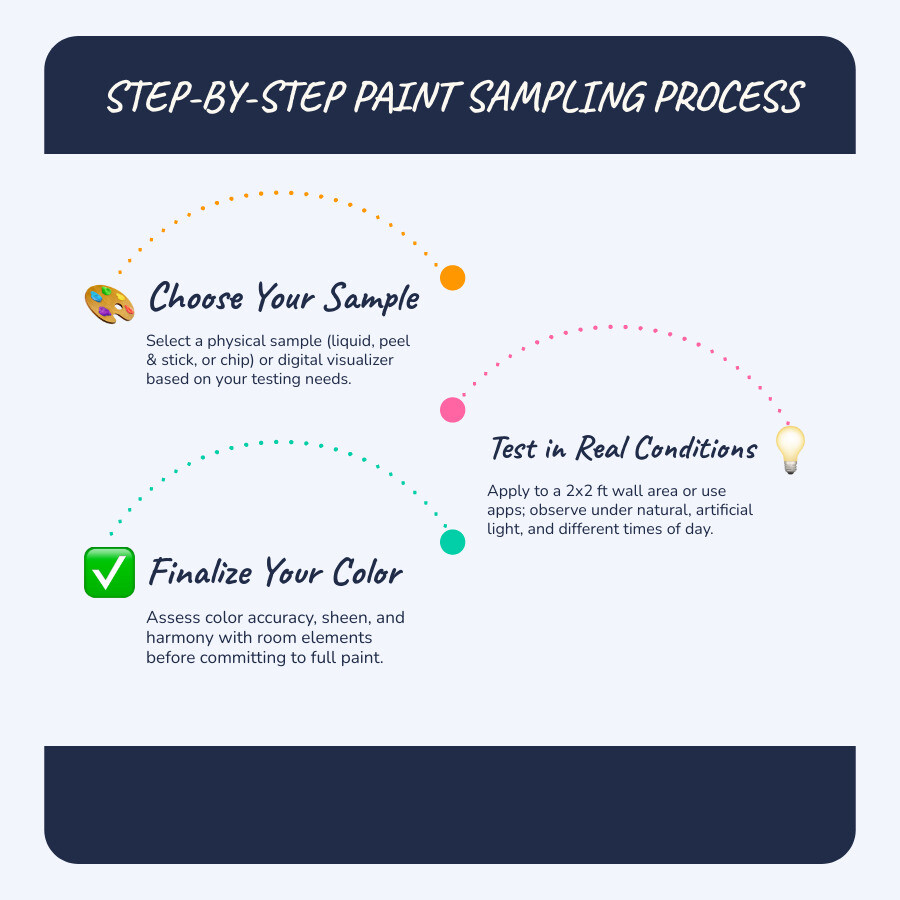
Discover more about room color sample:
Choosing the Right Room Color Sample for Your Space
When you walk into one of our Rhode Island locations—whether in North Kingstown, Cranston, Wakefield, Middletown, or Smithfield—you’ll see a world of color. But before you grab a gallon, you need to decide which sampling method fits your project.
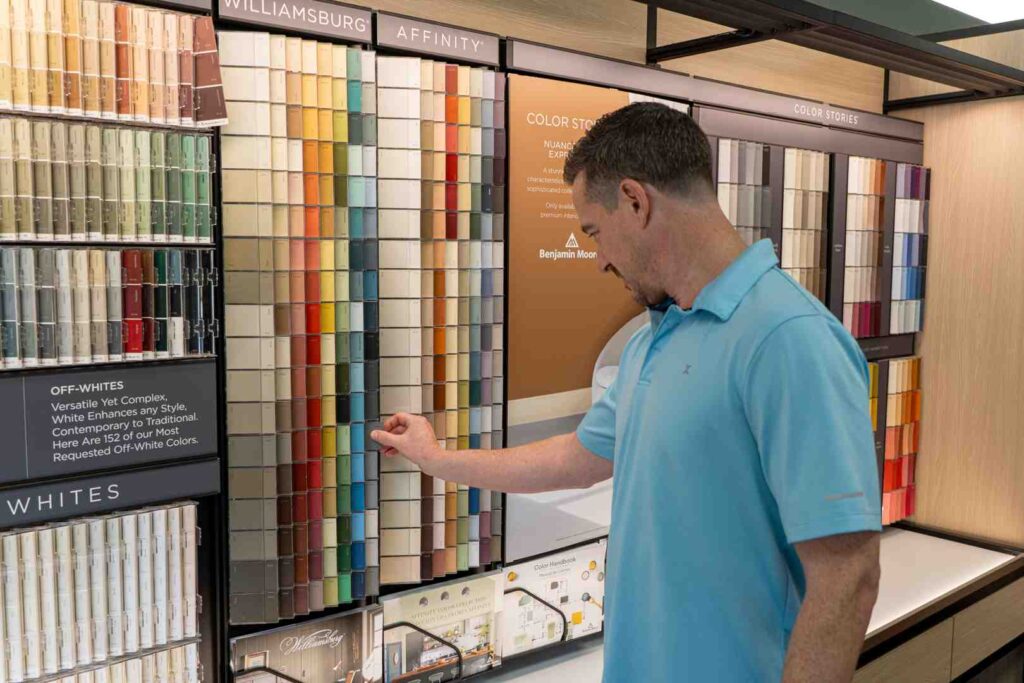
The three primary ways to test a color physically are color chips, peel-and-stick swatches, and liquid paint samples. Each has a specific role in the design process. Color chips are the “first date” of paint shopping; they are free, easy to grab, and help you eliminate the shades that definitely won’t work. However, they are printed with ink, not actual paint, which means they lack the depth and texture of the final product.
For a more accurate look, we often recommend moving to a physical room color sample made with real paint. Brands like Benjamin Moore offer 8 oz. liquid samples in over 3,500 colors. These allow you to see the actual pigment and how it reacts to the texture of your walls. Alternatively, PPG and Glidden offer liquid options and digital tools that help bridge the gap between imagination and reality.
| Feature | Color Chips | Peel & Stick | Liquid Samples (8 oz.) |
|---|---|---|---|
| Material | Ink on cardstock | Real paint on adhesive | Real liquid paint |
| Application | Hand-held | Adhesive backing | Brush or roller |
| Accuracy | Moderate | High | Highest |
| Mess Factor | None | None | Low to Moderate |
| Best Use | Narrowing 20 colors to 5 | Testing 3-5 final colors | Seeing true texture/depth |
If you are looking for more information on how to handle the interior painting process once you’ve picked your color, check out our guide on interior and exterior paints.
Comparing Peel & Stick vs. Liquid Room Color Sample Options
The “Great Debate” in the paint world recently has been between the traditional liquid pot and the modern peel-and-stick swatch.
Peel & Stick Samples These are 8″ x 8″ squares of real paint applied to a flexible, adhesive backing. They have become incredibly popular because they are completely mess-free. You don’t need a brush, a tray, or a drop cloth. Perhaps the biggest advantage is that they are repositionable. You can stick a sample next to your window in the morning and move it to a dark corner in the evening to see how the light changes the hue.
If you’re worried about your walls, don’t be. You can find out more about their safety in our article: do peel and stick samples come off?. For a deeper dive into choosing these, see our peel and stick buying guide.
Liquid Room Color Samples Despite the convenience of stickers, many pros still swear by the 8 oz. liquid sample. Why? Because it allows you to test the paint on your actual wall texture. If you have plaster walls or a heavy “orange peel” texture, a flat sticker won’t show you how shadows fall into those grooves.
A standard 8 oz. Benjamin Moore sample covers about a 2 ft. x 2 ft. area with two coats. This larger “swatch” gives your eyes more surface area to process, which is vital for seeing the true undertones of complex colors like sage green or cream.
Using Digital Tools for Initial Visualization
Before you even step foot in a store, digital tools can help you rule out colors that simply don’t fit your vibe. We love technology that takes the guesswork out of the early stages.
The virtual room painter tool from PPG is a fantastic example of this. It uses proprietary “edge-detect” technology to automatically map the boundaries of your walls in a photo. Instead of you having to carefully draw lines around your furniture and baseboards, the tool recognizes where the wall ends and the ceiling begins.
This provides a surprisingly realistic preview. You can upload a photo of your actual living room and “paint” it with a click. While digital screens can’t perfectly replicate how light hits physical pigment, these tools are excellent for seeing how a dark navy might make your small room feel, or how a mint green interacts with your hardwood floors. For more tips on using these tools, check out our virtual makeover tips.
How to Test Your Room Color Sample Like a Pro
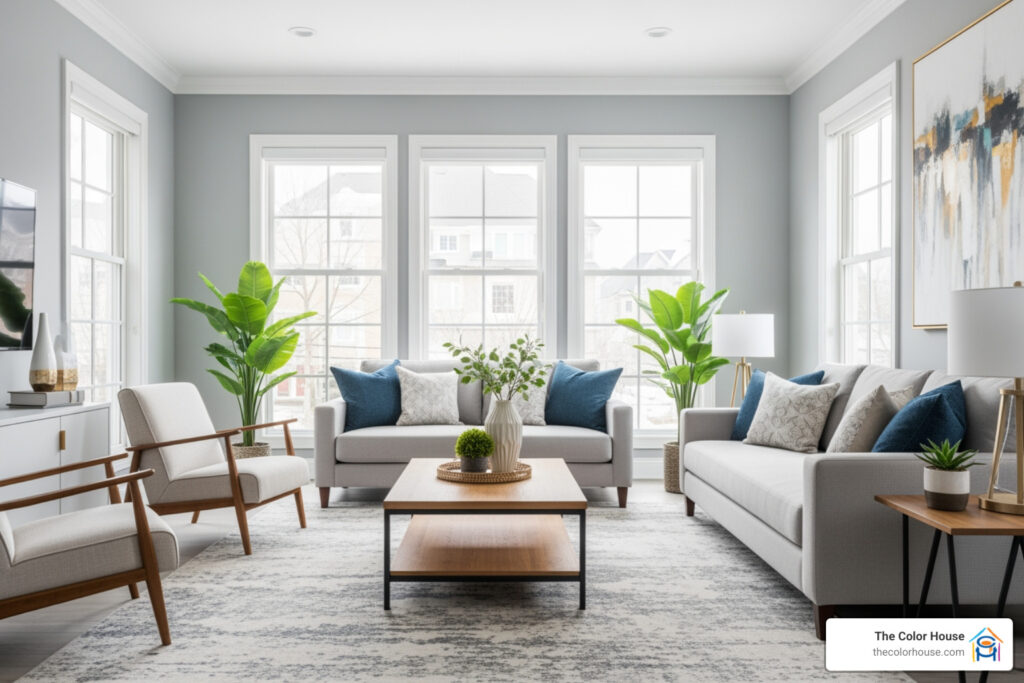
Sampling isn’t just about putting paint on a wall; it’s about observing it. Color is a chameleon. A “perfect gray” can look like a soft cloud at noon and a muddy purple by 8:00 PM.
The Lighting Factor Light is the most significant influence on your room color sample.
- Natural Light: North-looking rooms have a cool, bluish light, which can make colors look flatter or cooler. South-facing rooms get strong, warm light that can make yellows and oranges pop intensely.
- Artificial Light: LED bulbs come in different “temperatures.” A “Warm White” bulb will bring out yellow undertones, while “Daylight” bulbs can make colors look more clinical and blue.
Sheen and Texture Most liquid samples come in an eggshell finish. This is intentional! Eggshell is the “Goldilocks” of sheens—it has just enough soft glow to show you how light reflects off the surface without being as shiny as semi-gloss or as flat as a ceiling paint. This gives you the most accurate representation of how the color will live in your home. For more professional secrets, read our beyond the swatch expert tips.
Application Techniques for Your Room Color Sample
To get the most out of your liquid room color sample, follow these steps:
- The Two-Coat Rule: Never judge a color by the first coat. The first coat interacts with the color underneath it. The second coat is where the true pigment and richness come to life.
- The 2×2 Area: Paint a large enough square. A tiny 2-inch dot won’t tell you anything. You need at least a two-foot square to see how the color carries across a surface.
- Foam Board Testing: If you don’t want to paint directly on your walls yet, paint a piece of white foam board. This is a pro trick! It allows you to move the “wall” around the room to see it next to your sofa, your curtains, and in different corners.
- Consider the Room: Different rooms have different needs. For instance, bedroom paint samples should be viewed at night under bedside lamps, as that’s when you’ll be in the room most often. If you’re struggling with a specific space, look at our curated sample bedroom paint colors for inspiration.
Coordinating Colors with Blinds and Draperies
A room isn’t just four walls; it’s an ecosystem of textures and colors. One of the most overlooked aspects of choosing a room color sample is how it will look against your window treatments.
At The Color House, we specialize in indoor window treatments, including blinds, shutters, and draperies. When you bring in your paint samples, we encourage you to look at them alongside fabric swatches.
- Color Harmony: Do you want your drapes to “disappear” into the wall for a seamless, modern look? Or do you want a high-contrast look where dark navy walls make white plantation shutters pop?
- Light Filtration: The way your blinds filter light will change the color of your paint. For example, a warm wood blind will cast a golden hue onto your walls, which might make a cream color paint look too yellow.
Our team can help you coordinate these elements perfectly. Explore our window treatments services to see how we can help you finish the look.
Why Professional Guidance Matters at The Color House
While big-box stores might have aisles of paint, they often lack the specialized knowledge required to navigate complex color undertones. The Color House is a women-owned business rooted right here in Rhode Island. We pride ourselves on providing a personalized alternative where you aren’t just a transaction—you’re a neighbor.
We carry the largest inventory of Benjamin Moore in the state, offering premium products that provide better coverage and more accurate color than budget brands. Our experts can help you distinguish between a “cool” olive green and a “warm” one, saving you from making a mistake that requires a total repaint.
Whether you need a quick color consultation or full decorating services, we are here to ensure your project is a success from the first sample to the final stroke.
Frequently Asked Questions About Room Color Samples
How accurate are paint samples? Physical samples (liquid or peel-and-stick) are very accurate because they use the actual paint formula. However, the final look is influenced by the “metamerism” effect—where the same color looks different under different light sources. This is why testing in your own home is non-negotiable.
Can I use a liquid sample for touch-ups? We generally recommend against this. Samples are designed for color representation, not long-term durability or scrubbability. They often lack the specific resins found in full-grade interior paint. Using a sample for a touch-up might result in a patch that looks duller or wears off faster than the rest of the wall.
How long do I need to wait between coats on a sample? For most 8 oz. samples, like those from Glidden or Benjamin Moore, the paint is dry to the touch in about 60 minutes. However, you should wait about 4 hours before applying the second coat to ensure the color has fully developed.
Where can I buy a room color sample in Rhode Island? You can visit any of our five locations! We offer in-store pickup (often ready in just a few hours) and shipping options.
- North Kingstown, RI
- Cranston, RI
- Wakefield, RI
- Middletown, RI
- Smithfield, RI
Final Thoughts: Don’t Skip the Sample!
Choosing a new color for your home should be an exciting journey, not a stressful gamble. By using a room color sample, you take the power back. You get to see exactly how that sage green interacts with your morning sunlight or how that bold accent wall looks next to your favorite indoor blinds.
The cost of a few samples is a tiny fraction of the cost of a gallon of premium paint—and an even smaller fraction of the time it takes to repaint a room you don’t like.
Stop by The Color House today. Let our family help yours find the perfect shade. Whether you want to browse our massive color wall or sit down for a professional consultation, we’re ready to help you get your room colors right every single time.
Ready to start? Find a store near you and let’s get painting!