
Why Armstrong Clark Amber Stain Is a Top Choice for Wood Protection and Interior Coordination
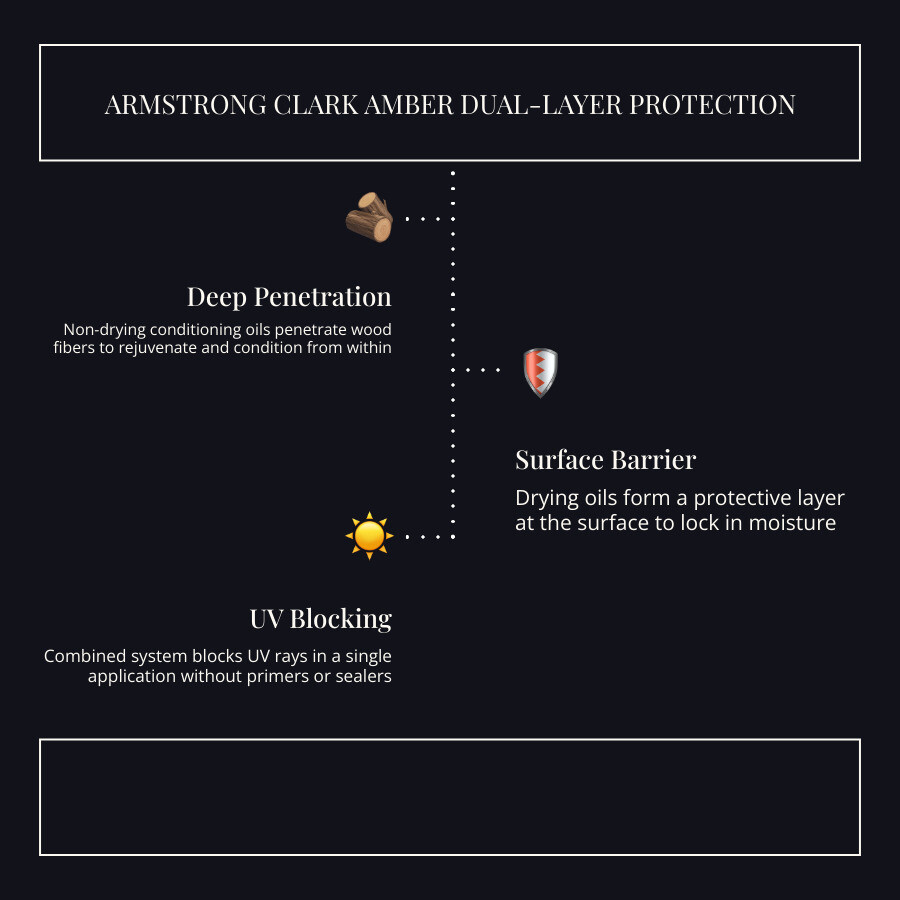
Armstrong Clark Amber stain is a premium oil-based wood stain that provides dual-layer protection through a unique combination of penetrating and surface-drying oils. While renowned for its performance on exotic hardwoods, the natural amber tone is also a favorite for homeowners looking to coordinate their outdoor living spaces with interior design elements like wooden blinds and custom draperies.
Quick Facts About Armstrong Clark Amber Stain:
- Protection: Dual-layer system with non-drying oils that penetrate wood fibers and drying oils that form a protective surface barrier
- Best For: Exotic hardwoods like Ipe, Mahogany, Cumaru, Tigerwood; also works on Cedar and pressure-treated Pine
- Coverage: 175-200 square feet per gallon depending on wood age and condition
- Application: Can be applied to wood with up to 20% moisture content, in direct sun, with second coat within 60 minutes if first coat fully absorbs
- Durability: Typically requires reapplication every 1-2 years on exotic hardwoods; maintenance coats need no stripping or sanding
- VOC: Less than 50g/L, compliant in all states
- Color: Lighter than Mahogany, darker than Natural Tone transparents; provides 2x the UV protection of Cedar Transparent
When to Choose Amber Over Other Colors:
Use Amber when you want to enhance natural wood tones on exotic hardwoods while maintaining a lighter, more natural appearance compared to Mahogany or Black Walnut. This warm, honeyed hue provides an excellent visual bridge to indoor window treatments, allowing for a seamless transition between your deck and your home’s interior. It’s particularly effective on Ipe decking and Mahogany surfaces where you want to preserve color variation while adding substantial UV protection.
The key advantage of Armstrong Clark Amber stain lies in its formulation—heavily bodied oils designed to penetrate dense exotic woods more effectively than standard stains. This penetration is critical for longevity, especially on hardwoods that would otherwise reject surface-only treatments.
As Douglas Caniglia, Director of Commercial and Industrial Sales at The Color House, I’ve guided countless Rhode Island homeowners through selecting the right armstrong clark amber stain for their wood projects and coordinating those finishes with interior blinds and shutters to achieve professional, cohesive results. Our team provides personalized recommendations based on your specific wood type, exposure conditions, and desired finish.
Key Features and Benefits of Armstrong Clark Amber Stain
When we talk to our neighbors in Cranston or Middletown about wood protection, the conversation usually starts with one word: durability. We’ve all seen what the Rhode Island salt air and shifting seasons can do to a deck. Armstrong clark amber stain isn’t just another bucket of color; it’s a scientific approach to wood preservation that also considers the aesthetic of your interior window treatments.
One of the standout features of this product is its VOC compliance. With a VOC level of less than 50g/L, it’s compliant in every state, including right here in RI. But “low VOC” often scares people into thinking the product won’t perform. In this case, it’s the opposite. The formula relies on traditional, non-modified oils that are legal everywhere precisely because they are high-quality, stable ingredients.
Another massive benefit is its moisture tolerance. Most stains require the wood to be bone-dry (usually under 12% moisture). If you’ve spent a summer in Smithfield, you know that “bone-dry” is a rare state of being. Armstrong clark amber stain can be applied to wood with up to 20% moisture content. This means you don’t have to wait three weeks for a heatwave to finish your project.
The Science of Non-Peeling
Why do most stains fail? They form a film on top of the wood that eventually cracks and peels when the wood expands and contracts. Armstrong Clark is a non-film-forming penetrating oil. It doesn’t sit on top like a layer of plastic; it lives inside the wood. This means:
- No peeling or cracking.
- No flashing or “sticky shiners” (those annoying shiny spots where the stain didn’t soak in).
- Easy maintenance (no sanding or stripping required for the next coat).
The UV protection in the Amber color is particularly impressive. It offers roughly twice the UV masking power of a standard “Natural” or “Cedar” transparent stain. This is because it uses higher-quality pigments that are transparent enough to see the wood grain but dense enough to block the sun’s graying effects. For more technical details on how these pigments function, you can check out the Scientific research on hardwood protection.

Ideal Wood Types for Armstrong Clark Amber Stain
While you can technically use this stain on almost any exterior wood, it truly shines on specific species. At The Color House, we generally categorize wood into two camps: the “thirsty” softwoods and the “stubborn” hardwoods.
1. Exotic Hardwoods (Ipe, Mahogany, Cumaru, Tigerwood)
These are the primary targets for the Amber color. These woods are so dense that standard stains just sit on the surface and turn into a sticky mess. Armstrong clark amber stain uses heavy-bodied oils that are forced into these tight pores. On Ipe, Amber gives that classic “wet look” without making the wood look unnaturally dark, which pairs beautifully with interior mahogany shutters.
2. Cedar and Redwood
If you have a cedar fence or redwood siding, Amber provides a beautiful, warm glow. It’s slightly lighter than the “Semi-Transparent Cedar” option, making it perfect for those who want a “fresh-cut” look that matches interior light oak or cedar blinds.
3. Pressure-Treated Pine
Yes, it works here too! If you’ve stripped an old deck in North Kingstown and want to give that green-tinted pine a more sophisticated, golden-brown appearance, Amber is a fantastic choice. It masks the chemical green of the pressure treatment while highlighting the natural grain. To learn more about how different woods react to various finishes, visit our guide on Wood Stains.
Enhancing Interior Wood Blinds and Window Treatments
While Armstrong Clark is famous for its exterior performance, the aesthetic of the “Amber” tone is something we often help clients replicate inside the home. At The Color House, we don’t just stop at the sliding glass door. We believe in a cohesive design that flows from your outdoor living space to your interior window treatments.
If you have a beautiful Mahogany deck stained in Amber, you might want to consider how your interior window treatments complement that view. Wooden blinds and interior shutters in a matching golden or honey oak finish can create a seamless transition.
Color Coordination Tips:
- Wooden Blinds: Choose a slat color that mimics the warm, honeyed tones of the Amber stain. This draws the eye outward and makes the deck feel like an extension of the room.
- Drapery Matching: If your deck furniture features blues or greens (which look stunning against Amber wood), we can help you find custom draperies that pick up those accent colors.
- Interior Shutters: For a classic Rhode Island look, matching the stained wood of your shutters to the exterior architectural details is a high-end design move that adds significant value to your home.
Whether you’re looking for the perfect blinds to frame your newly stained deck or custom drapes to soften the look, you can find More info about window treatments through our interior design services.
Application and Maintenance Guide for Long-Lasting Results
The secret to a deck that looks great for years isn’t just the product—it’s the process. We’ve seen DIYers in Wakefield try to skip steps, and we’ve seen professionals in Smithfield follow the manual to the letter. Guess whose deck looks better after a New England winter? Proper maintenance of your exterior wood also ensures that the view through your interior window treatments remains stunning year-round.
Before you even open the can, you need to know how much you need. Coverage varies wildly based on how old and “thirsty” your wood is.
| Wood Condition | Estimated Coverage (per Gallon) |
|---|---|
| New Wood (Smooth) | 200 – 300 sq. ft. |
| Old/Weathered Wood (Rough) | 150 – 200 sq. ft. |
| Exotic Hardwoods (Ipe/Mahogany) | 250 – 350 sq. ft. |
| Shakes and Shingles | 100 – 150 sq. ft. |
Note: These are estimates. We always recommend starting with a sample to see exactly how your specific wood absorbs the oil.
The Prep Phase: Cleaning and Brightening
Don’t you dare put stain on dirty wood! Even if the wood looks “clean,” it likely has a layer of mill glaze (if new) or grayed-out fibers and mold spores (if old).
- Clean: Use a high-quality wood cleaner to strip away dirt, grime, and mild graying.
- Brighten: This is the “magic” step. A wood brightener neutralizes the cleaner and opens the wood’s pores, making it more receptive to the armstrong clark amber stain. It also brings back the natural pH of the wood, which prevents the stain from darkening prematurely.
Once the wood is prepped and has dried to at least 20% moisture (usually 24-48 hours after cleaning), you’re ready to stain. If you’re wondering where to pick up these supplies locally, visit our page on Where to Buy Armstrong Clark.
Step-by-Step Application of Armstrong Clark Amber Stain
Applying this stain is actually quite forgiving. Unlike water-based stains that dry in seconds and leave “lap marks,” this oil-based formula gives you plenty of time to work.
Tools You’ll Need:
- A natural bristle brush (the best for pushing oil into the grain).
- A stain pad (great for large, flat deck boards).
- A drill mixer (like a Hyde Stir Whip) to ensure the pigments are perfectly blended.
The Process:
- Mix Thoroughly: The pigments in the Amber color can settle at the bottom. Mix it well before starting and occasionally during the job.
- Apply the First Coat: Start at one end of a board and go all the way to the other. Do not stop in the middle!
- The 60-Minute Rule: This is crucial. If the first coat soaks in completely within 60 minutes, the wood is telling you it’s still thirsty. You can apply a second “wet-on-wet” coat immediately. If the wood hasn’t absorbed the first coat after an hour, stop. Do not apply more, or you’ll end up with a sticky surface.
- Wipe Excess: If you see puddles or shiny spots after 30-60 minutes, take a dry rag or brush and “back-brush” the excess. For furniture or sitting surfaces, we recommend a total wipe-down after an hour to ensure no pigment rubs off on your clothes.
- Walk Away: Let it dry. Depending on the humidity in Rhode Island, this can take 24 to 72 hours.
For a deeper dive into the nuances of application, including videos and pro tips, check out More info about Armstrong Clark Stain.
Maintaining Your Stained Surfaces and Drapery Coordination
Maintenance is where armstrong clark amber stain really wins. Because it doesn’t form a film, you don’t have to sand it off when it starts to fade. When the wood begins to look “thirsty” or the color starts to lighten (usually 12-18 months for a sunny Ipe deck), you simply:
- Give it a light wash with a mild soap or wood cleaner.
- Let it dry.
- Apply a fresh maintenance coat of Amber.
It’s that simple. No heavy machinery, no dust, no headaches.
The Interior Connection: Blinds and Draperies
As we mentioned earlier, your home’s exterior and interior should speak the same language. If you’ve just refreshed your deck with Amber stain, it’s the perfect time to look at your indoor space.
Does your living room feel disconnected from that beautiful new golden-toned deck? Our interior design experts at The Color House can help you bridge that gap. We specialize in helping you choose the right slat size for blinds and the perfect fabric weight for draperies to complement your newly stained wood. We offer More info about color consultations where we look at everything from your wall color to your window treatments.
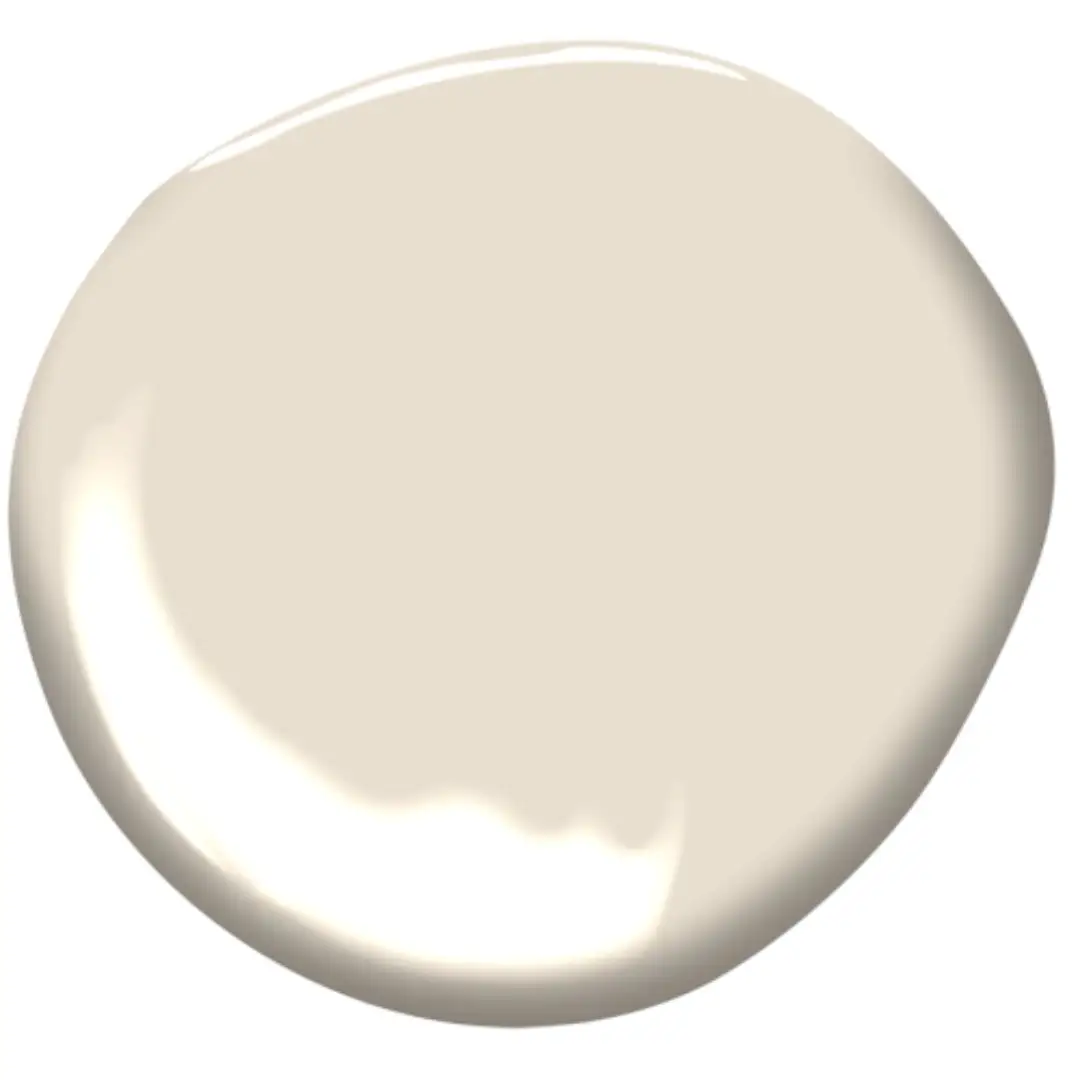
Imagine a room with Benjamin Moore’s “White Dove” on the walls, framing a set of custom linen drapes that open to reveal a perfectly stained Amber mahogany deck. The warm wood tones of the deck act as a natural anchor for the room’s design. We can help you select the right fabrics and blind materials to withstand the sun exposure that comes with having large windows or sliding doors.
Common Mistakes to Avoid
- Over-applying: More is NOT better with oil stain. If the wood can’t soak it up, it will stay tacky.
- Staining in the Rain: While it’s rain-fast after an hour of absorption, don’t apply it if a thunderstorm is imminent.
- Skipping the Sample: Wood is a natural product. A piece of 10-year-old Ipe in Middletown will look different than a new piece of Mahogany in Cranston. Always test a sample first!
At The Color House, we are proud to be a women-owned business serving our Rhode Island community. Whether you’re in North Kingstown or Smithfield, we’re here to provide the expert advice and premium products you need to make your home beautiful, inside and out. Stop by any of our locations to see the armstrong clark amber stain in person and let’s start your next project together!