The Enduring Allure of Sage Green
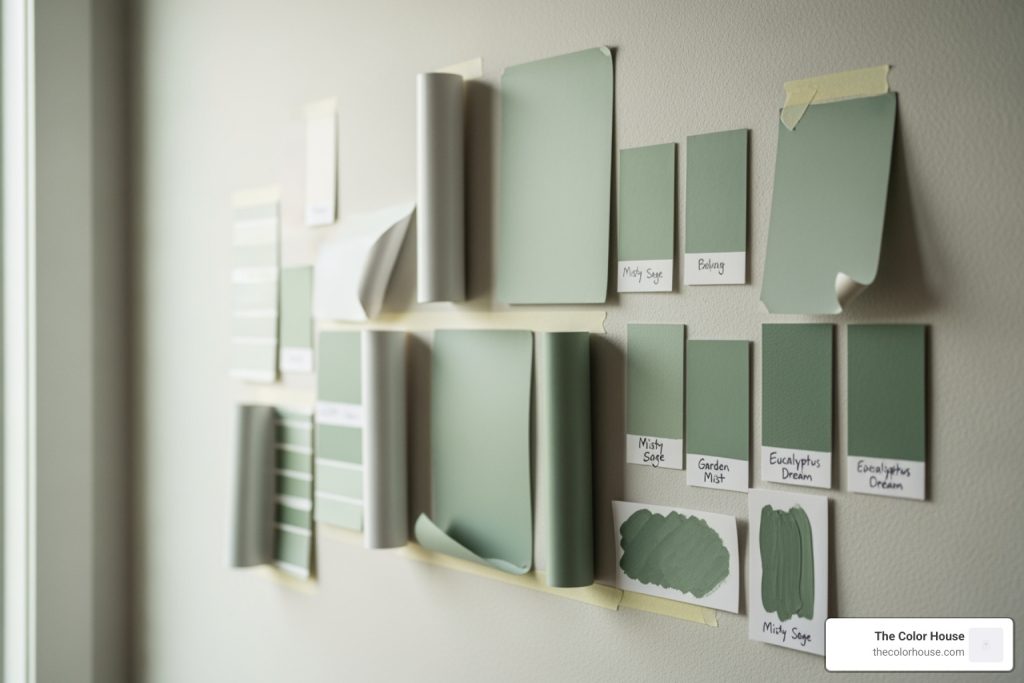
Sage green paint samples offer a practical way to explore one of today’s most versatile interior colors before committing to a full room. Here’s what you need to know:
Quick Guide to Sage Green Paint Samples:
- What They Are: Small quantities of paint (typically 8 oz. samples or peel-and-stick swatches) that let you test colors in your actual space
- Why They Matter: Sage green can look dramatically different depending on lighting, room size, and existing decor
- Where to Get Them: Available at specialty paint retailers like The Color House, featuring premium brands including Benjamin Moore, Sherwin-Williams, and Behr
- How to Use Them: Test on multiple walls, observe in morning and evening light, and check how the color interacts with your furniture and flooring
- Price Range: Typically $5-9 for traditional samples, with peel-and-stick options available for easy testing
Sage green has become one of the most sought-after paint colors for homeowners seeking that perfect blend of nature and renewal. This tranquil hue embodies peace while offering remarkable versatility across design styles—from modern farmhouse to contemporary spaces. The color’s popularity stems from its ability to create a serene, calming atmosphere while still feeling fresh and sophisticated.
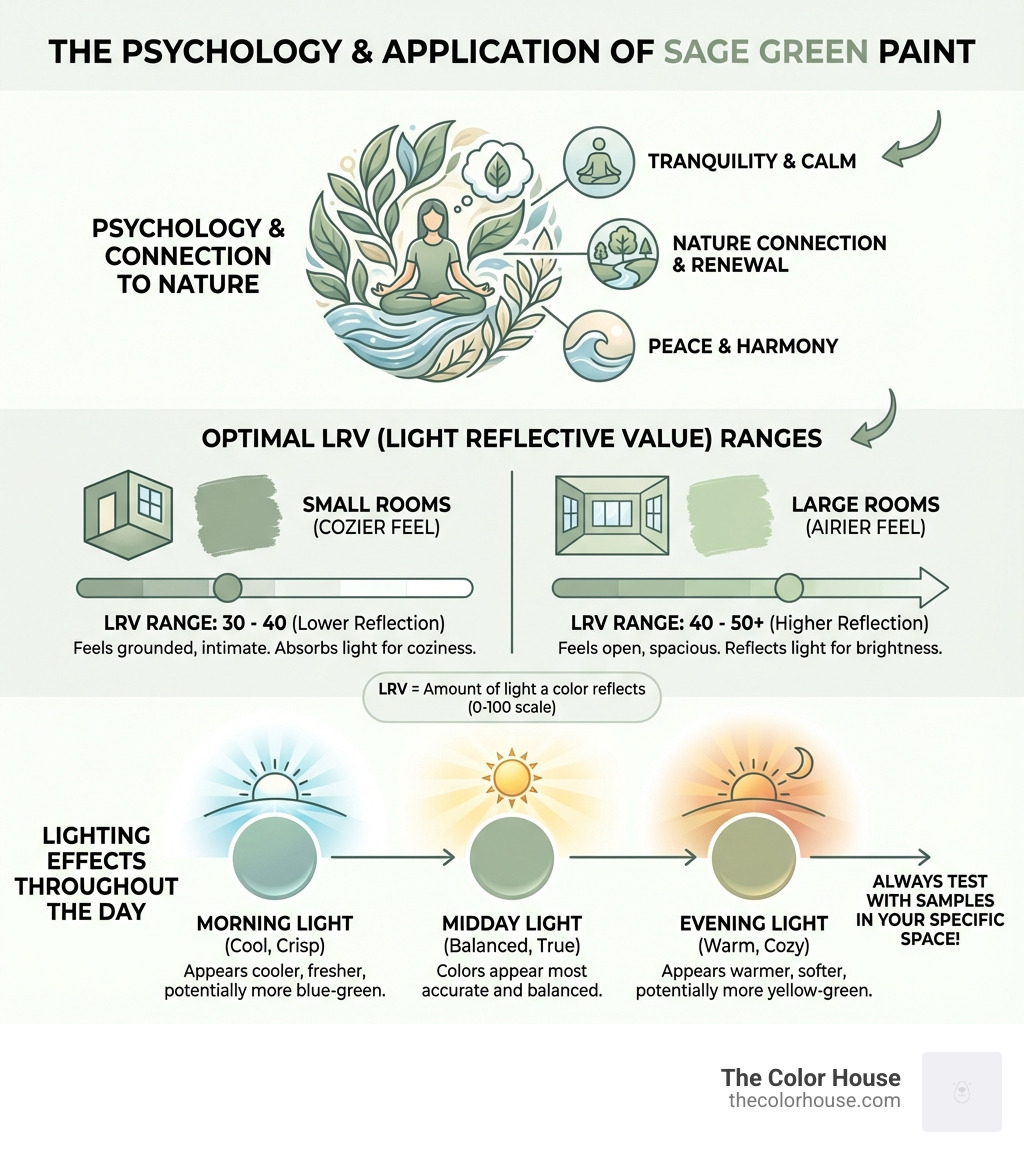
But here’s the challenge: sage green isn’t just one color. It’s a family of shades ranging from muted, gray-tinged greens to warmer, earthier tones. Some sage greens lean blue and cool, while others carry yellow or gray undertones that completely change their appearance. Light Reflective Value (LRV) also plays a crucial role—a sage with an LRV of 32 will feel dramatically different than one with an LRV of 41, especially in rooms with limited natural light.
That’s why sage green paint samples are essential. They eliminate the guesswork and help you avoid the costly mistake of painting an entire room only to find the color doesn’t work with your lighting or decor.
As Jean Hauser, owner and president of The Color House with over two decades of experience in paint and design, I’ve guided countless Rhode Island homeowners through the process of selecting sage green paint samples that transform their spaces with confidence. My team and I specialize in helping clients steer the overwhelming world of paint colors with personalized service and expert color consultation.
Understanding the Language of Paint: LRV, Undertones, and Finishes
Choosing the right paint color, especially something as nuanced as sage green, goes beyond just picking a pretty shade. To make an informed decision, we need to speak the language of paint, which involves understanding terms like Light Reflective Value (LRV), undertones, and finishes. These technical details are incredibly important for predicting how a color will behave in your home.
Let’s start with Light Reflective Value, or LRV. This is a measurement that tells us how much visible and usable light a painted surface reflects or absorbs. The LRV scale ranges from 0 (absolute black, absorbing all light) to 100 (pure white, reflecting all light). For instance, a sage green with an LRV of 41.0, like BEHR ICC-77 Sage Green or HGSSW6164 Svelte Sage, will reflect more light than one with an LRV of 32.55, such as Benjamin Moore Winchester Sage 628.
So, how does LRV affect your room? A higher LRV (typically 60 and above) will bounce more light around, making a room feel brighter and often larger. This can be fantastic for smaller spaces or rooms that lack natural light. A mid-range LRV (around 40-60) offers a beautiful balance, providing noticeable color without making the room feel dark. Conversely, a lower LRV (below 40) will absorb more light, which can create a cozier, more intimate, and sophisticated atmosphere, perfect for a den or a feature wall. When selecting sage green paint samples, consider the existing light in your room and the mood you want to create. A north-facing room with cool, indirect light might benefit from a sage with a slightly higher LRV to prevent it from feeling too shadowy, while a sun-drenched, south-facing room can handle a deeper, lower-LRV sage without feeling heavy.
Next, let’s talk about undertones. This is where sage green truly reveals its complexity! Sage green itself is a muted green, but its undertones can lean cool or warm. For example, Benjamin Moore Winchester Sage 628 is described as being “soothed by hints of gray and blue,” giving it a cooler feel. HGTV Home by Sherwin-Williams’ Svelte Sage also has a cool undertone. These gray and blue hints can make the color feel more serene and sophisticated, pairing beautifully with modern decor, marble, and chrome fixtures. Other sage greens might have yellow or brown undertones, making them feel warmer and earthier. These are perfect for creating a cozy, rustic, or bohemian vibe and pair wonderfully with natural wood, leather, and warm metals like brass. The undertone of your chosen sage green will interact with your home’s existing finishes—like flooring, furniture, and trim—so testing sage green paint samples is crucial to see how these elements play together.
Finally, we consider paint finishes. The sheen, or finish, you choose can dramatically alter how your sage green paint looks and performs. Here at The Color House, we offer a wide range of premium finishes to suit every need:
- Flat/Matte: Offers no sheen, a velvety look, and is excellent for hiding wall imperfections. However, it’s less durable and harder to clean, making it best for low-traffic areas like formal dining rooms or ceilings.
- Eggshell: Has a slight, soft sheen, resembling an eggshell. It’s more durable and washable than flat, making it a popular choice for living rooms, bedrooms, and general wall surfaces. It offers a neat, low-sheen look that diffuses light beautifully.
- Satin: Features a soft, pearl-like appearance with a higher sheen than eggshell. It’s very durable and easy to clean, making it ideal for high-traffic areas, kitchens, bathrooms, kids’ rooms, and even trim. Many sage greens look stunning in a satin finish, which brings out their depth without being overly shiny.
- Semi-Gloss/Gloss: These finishes have the highest sheen, are extremely durable, and are very easy to clean. They’re typically reserved for trim, doors, cabinets, and furniture, providing a protective, reflective surface that can make architectural details pop.
Choosing the right finish isn’t just about aesthetics; it’s also about durability. For a living room, an eggshell or satin finish on your sage green walls would offer both elegance and practicality. For kitchens and bathrooms, where moisture and cleaning are more frequent, a satin or semi-gloss is often recommended for its improved durability.
Decoding Technical Color Codes
Beyond LRV and undertones, there’s another layer of technical information that can be incredibly useful, especially for those working with digital design: color codes.
- RGB (Red, Green, Blue) Codes: These codes are the foundation for how colors are represented on digital screens. Every color is created by mixing varying intensities of red, green, and blue light. An RGB code, like 178, 172, 150 for Svelte Sage, indicates the specific amounts of red, green, and blue needed to produce that color digitally. These three sets of numbers create a wide representation of colors on a screen.
- HEX (Hexadecimal) Codes: This is a shorthand, hexadecimal way to represent RGB values, commonly used in web design and other digital applications. For example, Svelte Sage’s HEX code is #b2ac96, and BEHR ICC-77 Sage Green’s is #b4ac95. HEX codes allow us to experience colors in a digital format, ensuring consistency across different digital platforms.
For our clients in Rhode Island, understanding these codes can be helpful if you’re coordinating your paint choice with digital mood boards, fabrics, or other design elements you’ve found online. While these codes don’t directly translate to the physical paint formula, they serve as an excellent reference point for digital representation and communication with designers.
More info on sage green paint options at The Color House
A Curated List of Popular Sage Green Paint Samples
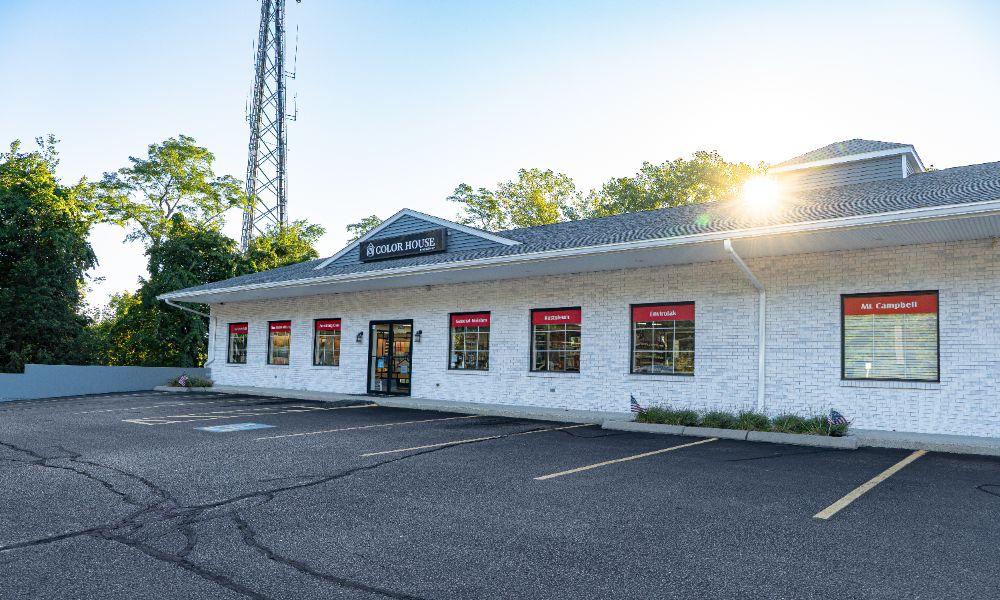
When you visit us at The Color House in Rhode Island, you’ll find an extensive collection of premium sage green paint samples from brands like Benjamin Moore, Sherwin-Williams, and Behr. We know it can be overwhelming, so we’ve curated a list of some of our favorite and most popular sage greens that our customers love. This table highlights their key characteristics to help you narrow down your choices:
| Name | Brand (via The Color House) | LRV | Undertones | Best For |
|---|---|---|---|---|
| October Mist 1495 | Benjamin Moore | 46.33 | Soft, silvery green with gray undertones | Creating a tranquil, grounded, and versatile backdrop for any room. |
| Svelte Sage SW 6164 | Sherwin-Williams | 41 | Green-gray with earthy, warm undertones | Cozy living rooms, bedrooms, and spaces with natural wood finishes. |
| Saybrook Sage HC-114 | Benjamin Moore | 44.91 | Muted green with gray and yellow undertones | Timeless and traditional spaces, kitchens, and entryways. |
| Evergreen Fog SW 9130 | Sherwin-Williams | 30 | Deep green-gray with a hint of blue | Creating a moody, sophisticated accent wall or a cozy, enveloping space. |
Sage Green Sample 1: Benjamin Moore October Mist (1495)
As Benjamin Moore’s Color of the Year 2022, October Mist is a gently shaded sage that has proven its timeless appeal. With an LRV of 46.33, it sits in that perfect mid-range, providing enough color to make a statement while still feeling light and airy. Its silvery-green hue is incredibly versatile, acting as a canvas that allows other colors and textures in the room to shine. It has subtle gray undertones, which give it a modern, sophisticated feel without being cold. This makes it an excellent choice for open-concept living areas, bedrooms where you want a sense of calm, or even a home office to encourage focus.
Sage Green Sample 2: Sherwin-Williams Svelte Sage (SW 6164)
Svelte Sage is a slightly deeper, more earthy take on sage green. With an LRV of 41, it absorbs a bit more light, creating a cozier and more grounded atmosphere. Its undertones are a beautiful blend of green and gray, but it can also show hints of warm beige or khaki in certain lighting, particularly in south-facing rooms. This makes it a fantastic partner for natural materials like wood, leather, and jute. We often recommend Svelte Sage for creating a restful bedroom retreat, a welcoming living room, or for kitchen cabinets to achieve a modern farmhouse look.
Sage Green Sample 3: Benjamin Moore Saybrook Sage (HC-114)
Part of Benjamin Moore’s prestigious Historical Collection, Saybrook Sage is a classic for a reason. It’s a timeless, livable green that feels both fresh and traditional. With an LRV of 44.91, it’s another well-balanced mid-tone shade. Its undertones are a complex mix of gray and a touch of yellow, which gives it a warm, inviting quality. Saybrook Sage is incredibly adaptable, looking just as at home in a colonial-style dining room as it does in a contemporary kitchen. It pairs beautifully with creamy whites, dark wood tones, and brushed nickel or brass hardware.
Sage Green Sample 4: Sherwin-Williams Evergreen Fog (SW 9130)
For those wanting a slightly bolder and more dramatic sage, Evergreen Fog is an exceptional choice. As Sherwin-Williams’ 2022 Color of the Year, this shade is a chameleon-like green-gray with a hint of blue. Its lower LRV of 30 means it creates a much moodier and more intimate feel. While it might be too dark for all four walls in a small, light-deprived room, it’s stunning as an accent wall, on cabinetry, or in a well-lit study or powder room. It brings a sense of sophisticated comfort and pairs beautifully with leather, cream, and metallic accents for a truly luxurious feel.