Understanding the Timeless Appeal of Pinch Pleats
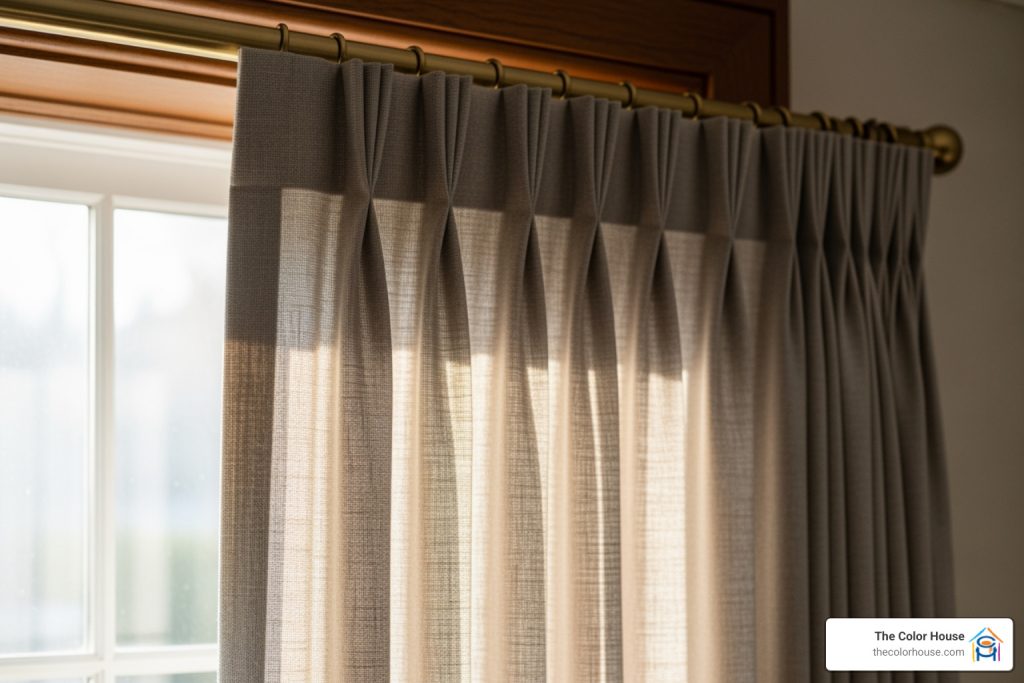
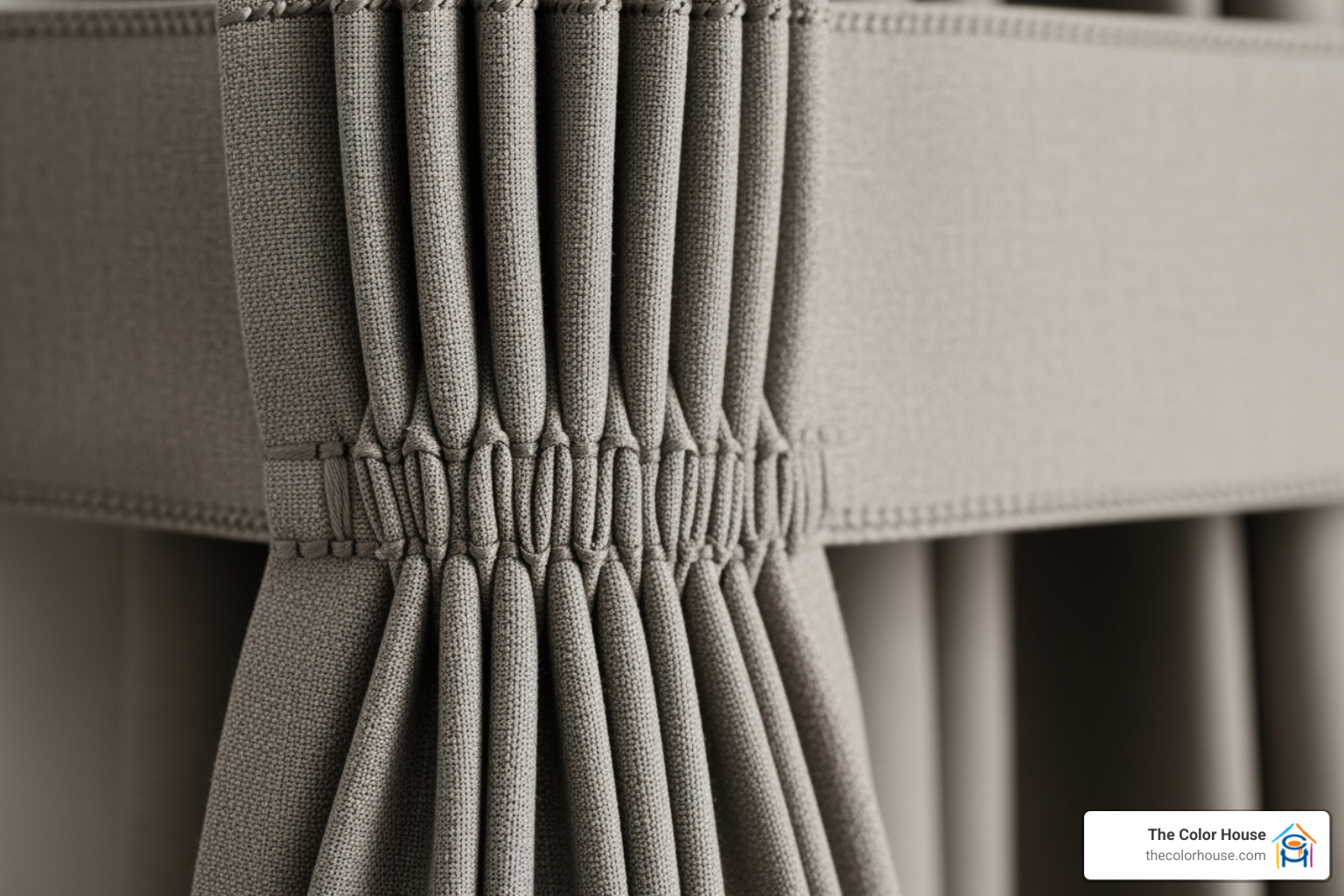
Pinch pleat drapery features fabric folded and stitched into pleats at the top of each panel, creating a structured, neat look that has defined formal window treatments for decades. Here’s what makes them unique:
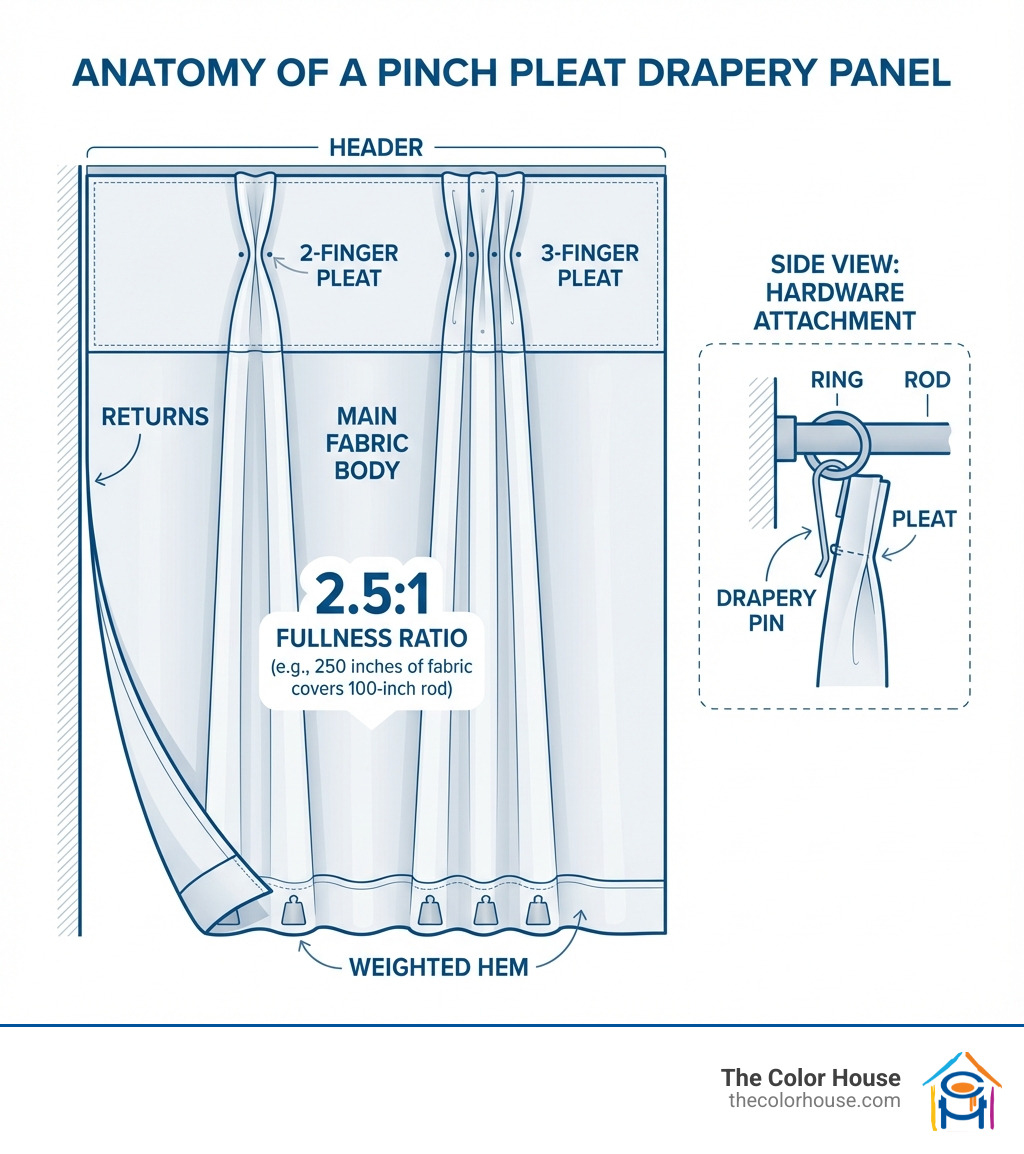
- Construction: Fabric is gathered into precise folds (typically 2 or 3 fingers) and tacked together, creating a decorative fan shape at the top
- Fullness: Made with a standard 2.5:1 fullness ratio (250 inches of fabric covers a 100-inch rod)
- Attachment: Uses drapery pins or hooks to hang from traverse rods or curtain rods with rings
- Best For: Traditional and formal spaces like living rooms and dining rooms where you want a custom, luxurious appearance
The beauty of pinch pleats lies in their versatility—they can range from the classic triple pinch pleat (also called French pleat) that creates a full, formal look, to the more contemporary double pinch pleat with its cleaner lines. Unlike flat panels or modern ripplefold styles, pinch pleats add dimension and structure to your windows while distributing fullness evenly across the panel.
Choosing the right window treatment can feel overwhelming when you’re investing in quality pieces for your home. As Jean Hauser, owner of The Color House with over two decades of experience in interior design and custom window treatments, I’ve helped countless Rhode Island homeowners steer pinch pleat drapery and find the perfect style to complement their paint colors and overall design vision. This guide will walk you through everything you need to know to make a confident decision.
Decoding the Classic Elegance of Pinch Pleat Drapery
Pinch pleat draperies are a hallmark of sophisticated interior design, known for their custom appearance and consistent folds. What makes them so special? It all comes down to their precise construction. Each pleat is carefully sewn and “pinched” at the top, allowing the fabric to fall in graceful, uniform folds from the rod to the floor. This creates a neat, organized look that works beautifully in both traditional and formal settings.
This style brings a sense of custom craftsmanship to any room. Unlike other drapery types that might look too casual or unstructured, pinch pleat drapery offers a clean, architectural line that lifts the entire space. They are designed to distribute fullness evenly, ensuring your drapes always look lush and luxurious, whether open or closed.
For a deeper dive into how pinch pleats are constructed and how they compare to other heading styles, you can also explore this overview of curtain headings and pleat styles. External resources like this are a helpful complement to the personalized guidance you will receive from our design team at The Color House.
A Tour of Pinch Pleat Styles
When we talk about pinch pleat drapery, we’re actually referring to a family of styles, each with its own unique character. While they all share the fundamental “pinched” top, the number of folds and the tacking point can dramatically change the aesthetic. Let’s explore the most popular variations:
| Style | Aesthetic | Formality | Functionality (Operable vs. Stationary) | Best Use Cases |
|---|---|---|---|---|
| Double Pleat (Two-Finger Pleat) | Contemporary, clean, V-shaped folds | Semi-formal to modern | Operable | Living rooms, bedrooms, home offices |
| Triple Pleat (Three-Finger Pleat / French Pleat) | Luxurious, full, decorative fan shape | Formal, traditional | Operable | Formal living rooms, dining rooms, master bedrooms |
| Parisian Pleat (Euro Pleat) | Modern, unstructured, neat flow, tacked at top | Modern, contemporary | Operable | Contemporary living spaces, bedrooms |
| Goblet Pleat | Ornate, rounded, champagne goblet shape | Very formal, decorative | Best for stationary | Formal dining rooms, decorative side panels |
| Inverted Box Pleat | Clean, contemporary, flat front with pleat to the back | Modern, minimalist | Best for stationary | Modern spaces, decorative panels where a flat look is desired |
-
Double Pinch Pleats (Two-Finger Pleats): These are a more contemporary take on the classic. Featuring two folds across the top, they create a crisp, V-shaped pleat that offers a slightly cleaner and less voluminous look than the triple pleat. They’re a fantastic choice for those who appreciate the custom appeal of pinch pleats but desire a more understated elegance.
-
Triple Pinch Pleats (Three-Finger Pleats / French Pleats): Often considered the epitome of traditional drapery, triple pleats feature three folds at specific intervals, tacked along the bottom to create a rich, decorative fan shape. Our research shows these are custom for a full and luxurious look, making them a great choice for formal areas like living rooms or dining rooms. They bring a sense of opulence and grandeur to any space.
-
Parisian Pleats (Euro Pleats): These offer a more modern, unstructured look with an neat flow. The key difference is that Parisian or Euro pleats are tacked at the very top of the pleat, allowing the fabric to fan out immediately below the rod. This creates a waterfall-like effect that many find more updated than the traditional pinch pleat.
-
Goblet Pleats: As the name suggests, these pleats create a large, rounded roll at intervals, shaped much like a champagne goblet. They are typically maintained with internal support (like foam inserts) to hold their shape. While incredibly decorative and formal, our research indicates that goblet pleats are best for stationary panels, as their intricate shape can be difficult to maintain if the drapery is frequently opened and closed.
-
Inverted Box Pleats: For a truly clean and contemporary aesthetic, inverted box pleats are an excellent choice. Here, the pleat is folded and sewn to protrude to the back of the panel, leaving a flat, smooth front. This creates a very architectural and minimalist look. Like goblet pleats, inverted box pleats are generally best for stationary panels because their structure can make them less practical for frequent operation.
Advantages and Disadvantages of Pinch Pleat Drapery
Every design choice comes with its own set of pros and cons, and pinch pleat drapery is no exception. We’ve found that understanding these can help you decide if this classic style is the right fit for your Rhode Island home.
Advantages:
- Timeless Elegance: Pinch pleats offer a classic, sophisticated look that never goes out of style. They instantly lift a room’s aesthetic, adding a sense of luxury and refinement.
- Structured Appearance: The custom pleats ensure a consistent, uniform drape, making your windows look neat and polished whether the drapes are open or closed.
- Fullness and Insulation: The inherent fullness of pinch pleat drapery (typically 2.5:1) means more fabric, which can contribute to better insulation and sound absorption, creating a cozier and quieter environment.
- Versatility with Hardware: They are highly compatible with traverse rods for easy operation and can also be hung beautifully on decorative curtain rods with rings.
- Excellent Light Control: When properly measured and installed with appropriate lining, pinch pleats can offer superior light blocking and privacy.
Disadvantages:
- Investment: Due to their custom nature and the amount of fabric and labor involved, pinch pleat drapery can be more of an investment compared to simpler, flat panel styles. However, as an investment, proper measuring is critical for both aesthetic and functional considerations.
- Specific Hardware Required: They require specific hardware (pins/hooks) and often traverse rods or rings, which might be an additional cost if you don’t already have them.
- Potential for “Dated” Look: While timeless, if not updated with contemporary fabrics or styling, some traditional pinch pleat styles can sometimes appear dated to certain aesthetics. This is where expert advice from us at The Color House can make all the difference!
- Stack-Back Considerations: For functional drapes, the pleats can take up more space when drawn back compared to flat panels, which is an important consideration for window coverage.
For additional background on how drapery headings affect function and style, this general curtain and drapery overview can be a useful reference alongside the custom recommendations you receive in our Rhode Island showrooms.
Style Showdown: Pinch Pleat vs. Modern Alternatives
While pinch pleat drapery holds a special place in classic design, it’s helpful to see how it stacks up against other popular drapery styles. This comparison will clarify why pinch pleats might be your perfect match, or if a more contemporary alternative better suits your vision.
If you want to see a broader context of how these styles fit into curtains and window treatments in general, you can also review this concise curtain overview as a neutral reference point.
Pinch Pleat vs. Euro Pleat
The Euro pleat (or Parisian pleat) is essentially a close cousin to the traditional pinch pleat, but with a modern twist that creates a distinct aesthetic.
- Tacking Point: The primary difference lies in where the pleats are tacked. Traditional pinch pleat drapery is tacked at the bottom of the pleat, allowing the fabric to fan out above the tack point. Euro pleats, on the other hand, are tacked at the very top, creating a more streamlined, waterfall-like flow directly from the rod.
- Aesthetic: A traditional pinch pleat creates a classic, decorative fan shape. The Euro pleat, with its top-tacked design, offers a more modern, unstructured look with neat flow. Some designers feel the Euro pleat gives a more updated appearance.
- Fullness Control: Both styles offer excellent fullness control, ensuring a rich, luxurious drape.
- Stack-Back Comparison: Generally, both pinch and Euro pleats will have similar stack-back characteristics since they both involve gathered fabric. The key is in the visual presentation of that gathering.
Pinch Pleat vs. Ripplefold and Grommet Panels
When we look beyond pleated styles, we encounter options like ripplefold and grommet panels, which offer distinctly different looks and functionality.
- Structured Pleats vs. Uniform Waves:
- Pinch Pleats: These feature defined, structured pleats that create a formal, custom appearance. The fabric gathers into crisp folds.
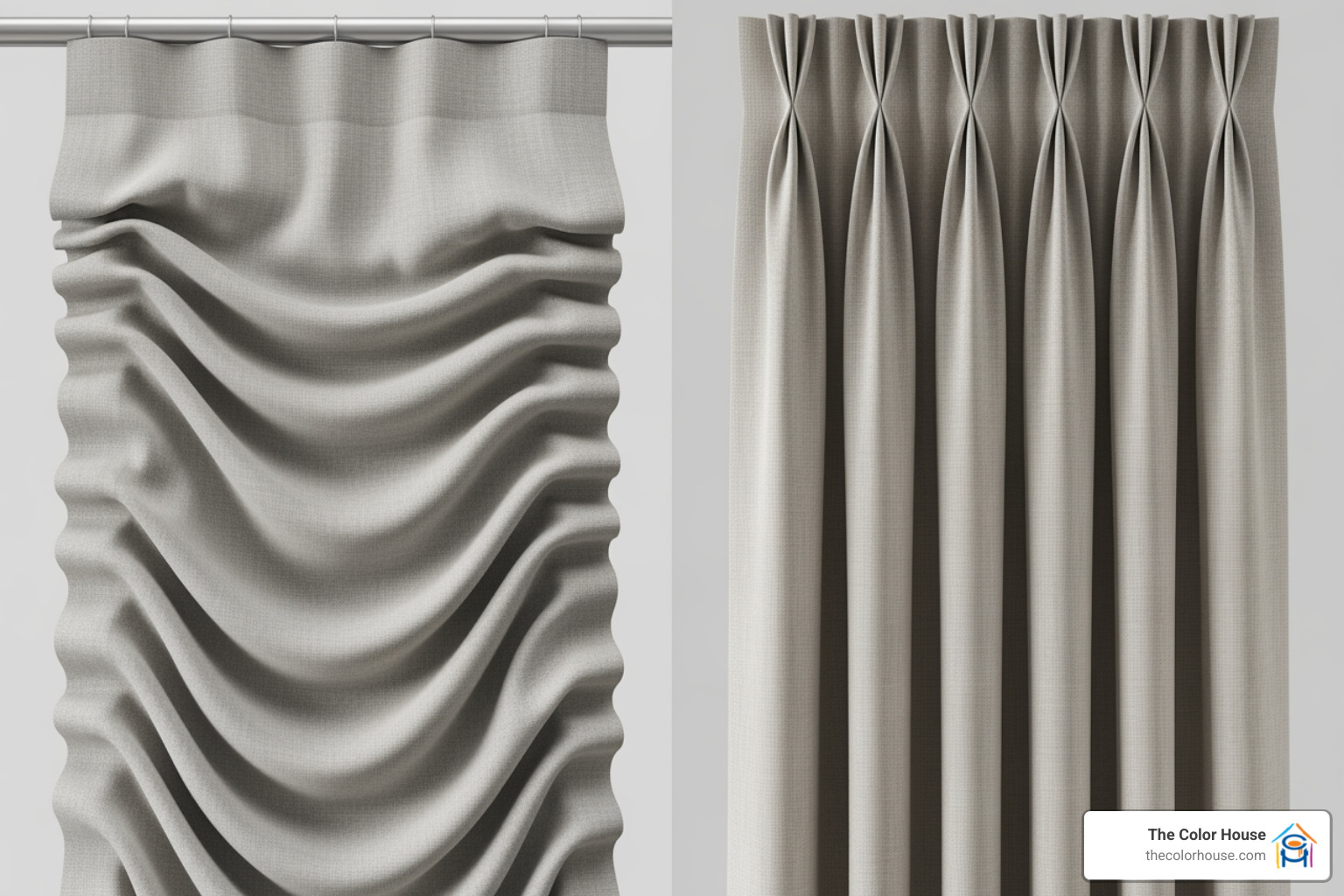
- Ripplefold: This style creates continuous, soft, S-shaped waves that glide smoothly along a track. There are no individual pleats, just a consistent, flowing ripple. Our research notes that ripplefold panels offer a contemporary look with consistent fullness, managed by special hardware. The 100% fullness option for ripplefold is equivalent to 2 times fullness for pleated panels.
- Grommet Panels: These have metal rings (grommets) punched directly into the top edge of the fabric, through which the rod passes. This creates large, soft, undulating folds.
- Contemporary Aesthetic: Ripplefold and grommet panels lean heavily towards a modern and minimalist aesthetic. They offer a clean, unfussy look, contrasting with the more ornate and traditional feel of pinch pleat drapery. Unpleated, grommet, and ripplefold panels all offer a more contemporary look.
- Hardware Differences:
- Pinch Pleats: Require drapery pins/hooks and work with traverse rods or decorative rods with rings.
- Ripplefold: Requires a specialized track system with carriers designed to maintain the consistent S-curve.
- Grommet Panels: Designed to slide directly onto a curtain rod.
- Operable vs. Stationary Panels: While pinch pleat drapery is excellent for both functional and stationary applications, ripplefold panels are specifically designed for traversing and maintain their fullness beautifully when closed. Grommet panels and unpleated panels are almost always stationary, as their movement can be less smooth and consistent than pleated or ripplefold styles.
The Perfect Match: Choosing Fabric, Lining, and Hardware
Selecting the perfect pinch pleat drapery for your Rhode Island home involves more than just picking a style. The fabric, lining, and hardware all play crucial roles in the final look, feel, and functionality of your window treatments. Think of it as a symphony where each element contributes to the overall harmony.
Key Considerations for Fabric Selection
The fabric you choose sets the tone for your entire room. For pinch pleat drapery, the material significantly impacts how the pleats fall and how the drapes function.
- Fabric Weight: This is paramount. Heavier fabrics like velvet or chenille create a more opulent, luxurious drape with well-defined pleats. Lighter fabrics like linen or cotton offer a more relaxed, airy feel. For purely decorative drapes, lighter weights are fine, but for functional draperies needing light/privacy regulation, heavier fabrics are often preferred.
- Material: We’ve seen a wide range of materials work beautifully for pinch pleats, including:
- Linen: Offers a natural texture and a relaxed, yet sophisticated, look.
- Velvet: Exudes luxury and provides excellent insulation and light blocking.
- Silk: Adds a shimmering elegance but can be delicate and prone to sun damage (making lining essential).
- Cotton: Versatile, durable, and comes in a vast array of colors and patterns.
- Chenille, Damask, Denim, Embroideries, Satin, Suede, Toile: Each offers unique textures and visual interest.
- Pattern vs. Solid: A solid fabric emphasizes the architectural beauty of the pleats, while patterns can add visual interest. For patterns, consider the scale in relation to your room and window size. Our best advice is to coordinate your fabric choice with your room’s overall decor, considering color, scale, and pattern.
- Durability and Light Control: Think about the room’s usage. A sunny room might benefit from a more fade-resistant fabric, and if light blocking is a priority, the fabric choice is just the first step.
The Unseen Hero: Drapery Linings and Their Benefits
Often overlooked, the lining of your pinch pleat drapery is truly the unseen hero. It impacts not only the drape’s appearance but also its functionality and longevity.
Here are the common lining options and their benefits:
- Standard Lining: This is the most affordable option. It acts primarily as a fabric backing, protecting your face fabric from sun damage and providing a more finished, consistent look from the outside of your home. It offers basic light filtering.
- Satin Finish Lining: A step up from standard, this medium-weight lining improves the drape of the fabric and offers better light filtering capabilities.
- Privacy Lining: As the name suggests, this lining significantly reduces light penetration and provides improved privacy. It also aids in insulation, helping to keep your home warmer in winter and cooler in summer.
- Blackout/Thermal Lining: These are essentially the same product. This heavyweight lining is designed to eliminate light, making it ideal for bedrooms or media rooms. Beyond light blocking, it offers superior thermal insulation, reducing energy consumption, and can even help with noise reduction.
- Interlining: For the ultimate in luxury and performance, interlining adds an extra layer of flannel-like material between the face fabric and the main lining. This gives the drapery a much fuller, more opulent look, improves thermal efficiency, and improves the overall drape and hand of the fabric.
Choosing the right lining can protect your investment, extend the life of your drapes, and significantly improve your room’s comfort.
Hanging in Style: Hardware for Your Pinch Pleat Drapery
The hardware you select is crucial for both the functionality and aesthetic appeal of your pinch pleat drapery. It’s the framework that allows your beautiful drapes to shine.
- Traverse Rods: These are the workhorses for functional pinch pleat drapery. They feature a cord and pulley system, allowing you to easily open and close your drapes with a gentle pull. The pleats attach to carriers that glide smoothly along the track, ensuring effortless operation.
- Curtain Rods with Rings: For a more decorative approach, especially with stationary panels or drapes that are opened manually, curtain rods with rings are a popular choice. The drapery pins hook into small eyelets on the rings, which then slide along the rod. This option allows for beautiful finials (the decorative ends of the rod) to be showcased.
- Drapery Hooks/Pins: These small, essential components are what connect your pinch pleats to either the carriers of a traverse rod or the rings of a decorative rod. They are inserted into the back of each pleat.
- Finials: These decorative end pieces cap off your curtain rod, adding a touch of personal style and completing the look.
- Returns: These are the sections of fabric that wrap around the ends of the rod to the wall. Returns provide a clean, finished look and, importantly, help eliminate gaps between the drapery and the wall, significantly reducing light leakage. We typically recommend a 4″ Standard Return for most single rod installations, but a 6″ Extended Return is available for double rod installations or when more clearance is needed.
Measure Twice, Hang Once: A Guide to Perfect Drapery Sizing
We always say that pinch pleat drapery is an investment, and like any good investment, it requires careful planning – especially when it comes to measurements. There’s nothing more frustrating than beautifully crafted drapes that don’t fit your windows perfectly. Whether your drapes will be functional (opened and closed daily) or purely stationary (decorative side panels), precise measurements are key to achieving that polished, custom look for your Rhode Island home.
Understanding Fullness and Stack-Back
Two terms are vital when measuring for pinch pleat drapery: fullness and stack-back.
- Fullness: This refers to the amount of fabric used relative to the width of the window or rod. For pinch pleat drapery, a 2.5:1 fullness ratio is standard. This means that for every 100 inches of window width, we use 250 inches of fabric to create those luxurious, consistent pleats. This generous amount of fabric is what makes pinch pleats look so rich and neat.
- Stack-Back: This is the amount of space the draperies occupy when they are fully open or “stacked back” to the side of the window. For functional draperies, stack-back is crucial because it ensures that when the drapes are open, they clear the window opening completely, allowing maximum light and an unobstructed view. We always add stack-back to the width measurement to allow the draperies to cover the wall and window frame when drawn back. For example, if your window opening is 84 inches, and you need 30 inches for stack-back (15 inches per side), your total drapery width requirement would be 114 inches. This allows the drapes to completely clear your window when open, making your windows appear larger.
For stationary panels, the sizing is more art than precision. You’re typically aiming to frame the window. For larger windows, ordering at one-half the actual width is often sufficient, ensuring they cover the wall and window frame. However, for smaller windows, a full width is recommended to avoid a skimpy appearance.
Getting the Length Just Right
The length of your pinch pleat drapery dramatically impacts the room’s aesthetic. We typically recommend three common lengths for functional draperies:
- Ceiling to Floor: This creates a dramatic, elongated look, making your ceilings appear higher. Measure from the ceiling to the floor, taking the shortest measurement across the width of the window, and remember to deduct for your rod and floor clearance (typically ½” to ¾” for functional drapes). Installing rods higher than the window frame, perhaps halfway between the top of the frame and the ceiling for 8-foot ceilings, gives a room a sense of height.
- Above the Frame to Floor: A classic choice, where the rod is installed above the window frame, and the drapes just skim the floor. Again, a ½” to ¾” floor clearance is recommended for functional drapes.
- Above the Frame to Below the Frame: This shorter length is often used for windows that have furniture beneath them or where a full-length drape isn’t practical. The drapes typically extend two or three inches above the frame and two or three inches below the apron (the decorative trim beneath the windowsill).
What about a little drama? Puddling or pooling, where draperies have a gentle break on the floor, is generally achieved with an additional 2 inches of length. While beautiful for decorative, stationary panels, our research shows that puddling is not recommended for functional draperies, as it can interfere with smooth operation and gather dust.
Common Mistakes to Avoid When Ordering Your Pinch Pleat Drapery
Even with the best intentions, it’s easy to make a few missteps when ordering custom pinch pleat drapery. Here are some common mistakes we help our Rhode Island clients avoid:
- Incorrect Measurements: This is the most critical error. Underestimating width can lead to drapes that don’t close fully or look too sparse. Incorrect length can result in drapes that are too short or too long. Always measure your window opening, desired rod placement, and account for stack-back. Pinch pleat draperies are an investment, and proper measuring is critical for both aesthetic and functional considerations.
- Forgetting Stack-Back: As we discussed, ignoring stack-back for functional drapes means your beautiful pleats will cover part of your window when open, blocking light and views.
- Choosing the Wrong Hardware: Not all rods are created equal. Trying to hang heavy pinch pleat drapery on a flimsy rod or using the wrong type of rings can lead to sagging, difficult operation, or even damage. Ensure your hardware matches the weight and function of your drapes.
- Wrong Fabric Weight for the Pleat Style: A very stiff fabric might not create soft, flowing Euro pleats, while a very light fabric might not hold the defined shape of a goblet pleat. Consider how the fabric will behave with your chosen pleat style.
- Not Considering Lining: Skipping lining can lead to issues like premature fading of your face fabric from sun exposure, insufficient light control, and a less luxurious drape. Always think about the functional benefits lining offers.
Conclusion: Designing Your Dream Windows
Pinch pleat drapery stands as a testament to timeless elegance and custom sophistication. Its structured folds and consistent fullness bring a refined aesthetic to any room, making it an excellent choice when you desire a classic, luxurious, and polished look. Whether you opt for the opulent triple pleat for a formal dining room or a cleaner double pleat for a contemporary living space, these drapes contribute significantly to a room’s overall ambiance, adding depth, texture, and a sense of bespoke quality.
When are pinch pleat drapery the best choice? They excel in rooms where you want a traditional, formal, or highly custom aesthetic. They are perfect for creating a sense of grandeur in living rooms, adding serene elegance to bedrooms, or bringing a sophisticated touch to dining areas. Their structured nature also makes them highly effective for light control and insulation, especially when paired with the right lining.
From understanding the nuances of different pleat styles like the Parisian or inverted box, to carefully selecting the perfect fabric, lining, and hardware, to mastering the art of precise measurement and stack-back calculations, we’ve covered the essentials to help you make informed decisions. Avoiding common pitfalls will ensure your investment in pinch pleat drapery brings lasting beauty and functionality to your home.
For expert guidance on selecting the perfect window treatments to complement your home’s unique style and paint colors, the design professionals at The Color House can help. We’re here to assist you every step of the way, ensuring your windows in North Kingstown, Cranston, Wakefield, Middletown, or Smithfield, Rhode Island, are dressed to perfection.