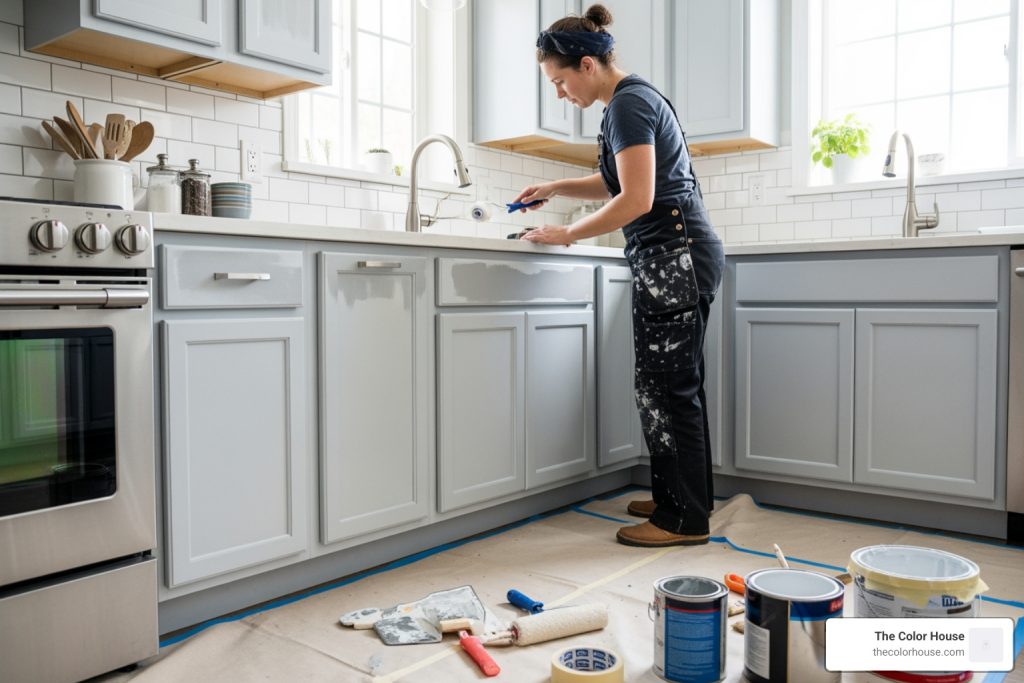
Why Kitchen Cabinet Paint is the Smartest Kitchen Update You Can Make
Kitchen cabinet paint is a specialized coating designed to withstand the high-traffic, high-touch environment of kitchen cabinets. The best options include waterborne alkyd enamels (like Benjamin Moore Advance) or premium acrylic enamels, applied in satin or semi-gloss finishes for durability and easy cleaning.
Quick Answer for Cabinet Paint Selection:
- Best Overall: Waterborne Alkyd Enamel (e.g., Benjamin Moore Advance)
- Best Finish: Satin or Semi-Gloss for durability and cleanability
- Coverage: 1 quart covers ~140 sq ft (apartment kitchen), 1 gallon covers ~350-400 sq ft
- Typical Cost: $80-120/gallon for premium paint, $170-230 total for DIY project
- Coats Needed: 1 coat primer + 2 coats paint
- Cure Time: 24 hours between coats, 2-3 weeks for full hardness
Painting your kitchen cabinets can save you anywhere from $2,000 to $20,000 compared to replacement. As one experienced DIYer finded, “After painting everything from builder-grade vanities to full kitchen remodels over the years, I’ve tried just about every type of cabinet paint—oil-based, latex, chalk paint, you name it. Some were great. Others? Not so much.”
The key to success isn’t just picking any paint off the shelf—it’s understanding which products are specifically formulated for the demanding environment of kitchen cabinets, and following the proper preparation steps that ensure your hard work lasts for years.
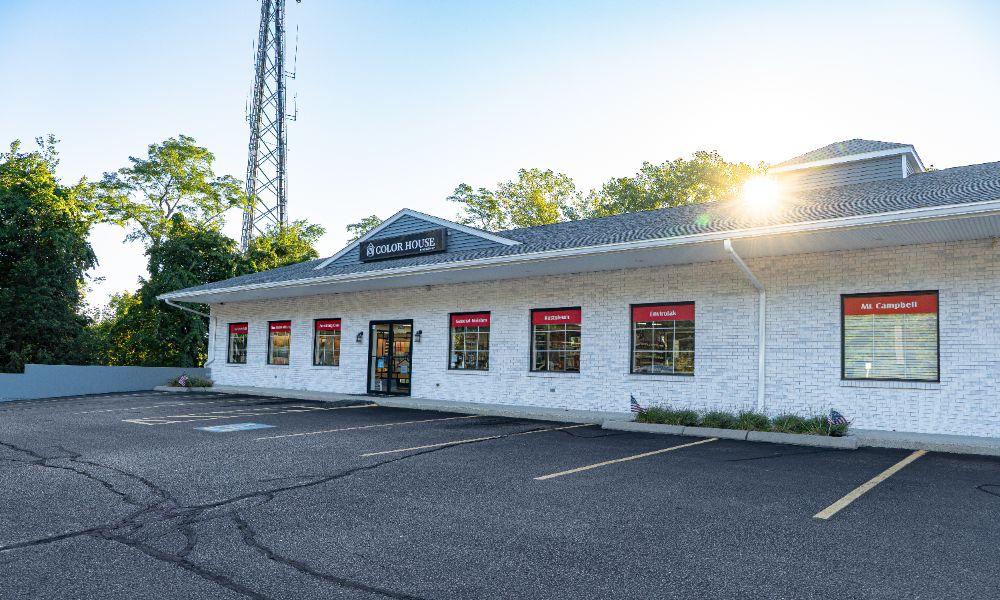
I’m Jean Hauser, owner and president of The Color House, Rhode Island’s premier Benjamin Moore paint retailer, with over two decades of experience helping homeowners select the right kitchen cabinet paint for stunning, durable results. Our team has guided countless DIYers through successful cabinet changes using proven techniques and premium products.
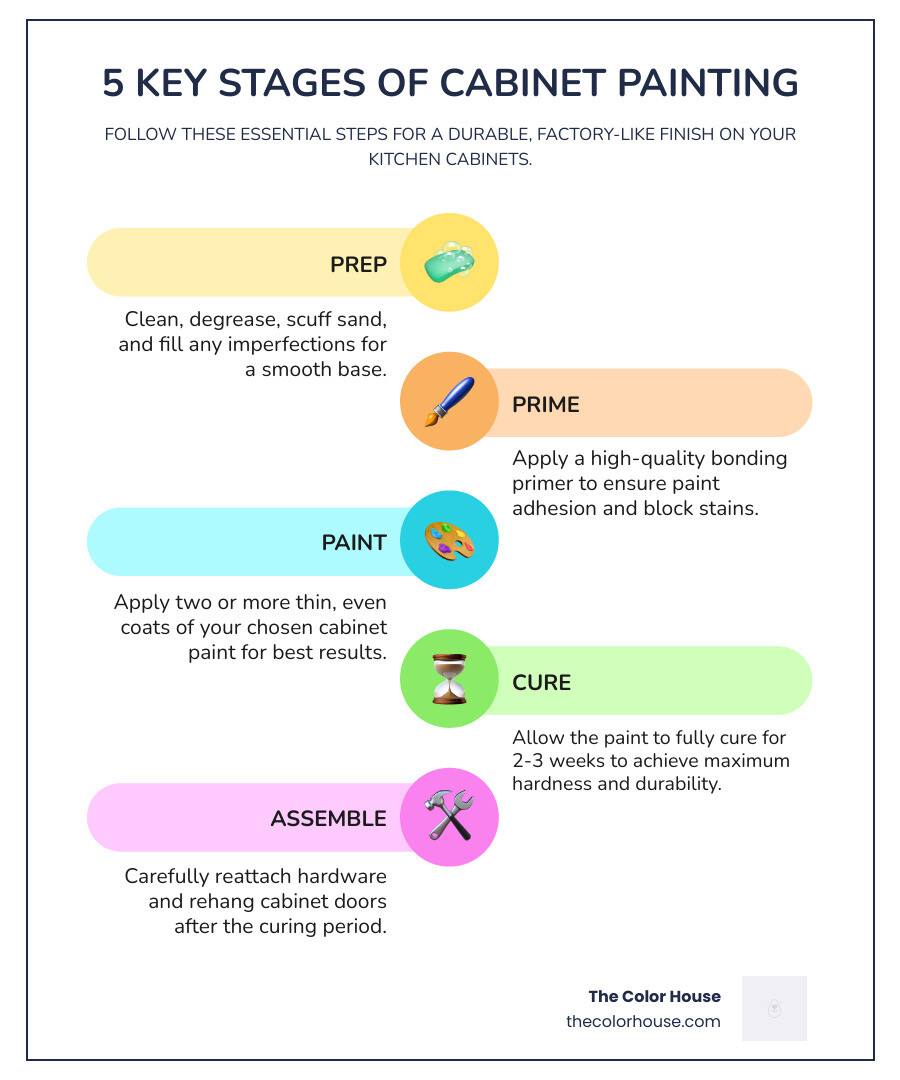
Choosing the Perfect Kitchen Cabinet Paint and Sheen
Choosing the right kitchen cabinet paint is the first, and arguably most important, decision you’ll make. The ideal paint for cabinets boasts several key features: superior durability to withstand daily wear and tear, excellent self-leveling properties for a smooth, factory-like finish, low VOCs for better indoor air quality, and a washable finish for easy cleaning. We’ve seen how investing in quality paint pays off in the long run.
Here’s a quick comparison of the most common types of paint suitable for cabinets:
| Paint Type | Durability | Finish | Cleanup | Dry Time |
|---|---|---|---|---|
| Waterborne Alkyd Enamel | Excellent | Hard, smooth, non-yellowing | Water | Moderate (longer open time) |
| 100% Acrylic Paint | Very Good | Smooth, flexible | Water | Fast |
Understanding Paint Types: Alkyd vs. Acrylic
When it comes to kitchen cabinet paint, you’ll primarily encounter two top contenders: waterborne alkyd enamel and 100% acrylic paint. Both have their merits, but understanding their differences is crucial.
Waterborne Alkyd Enamel: This is often considered the “secret weapon” for cabinet painting, and for good reason! It’s a hybrid technology that combines the best of both worlds. It offers the incredible durability and hard, smooth finish traditionally associated with oil-based paints, but with the low VOCs, easy water cleanup, and non-yellowing properties of water-based paints. This means you get a tough, resilient surface that can stand up to the daily abuse of a busy kitchen, without the harsh fumes or difficult cleanup. Benjamin Moore ADVANCE is a prime example of a premium waterborne alkyd paint that consistently delivers outstanding results for our customers. You can learn more about this fantastic product and its benefits here: More on Benjamin Moore Advance paint.
100% Acrylic Paint: These paints are also water-based and offer good durability and flexibility. While they may not always achieve the same rock-hard finish or self-leveling properties as a high-quality waterborne alkyd, modern acrylic paints have come a long way. They are generally faster drying and can be a good choice for certain projects. Some acrylic mineral paints are praised for their ease of use and ability to adhere well without extensive priming. However, for high-use areas like kitchen cabinets, we often recommend a topcoat over such paints to boost their long-term durability.
What about traditional oil-based paints? While they were once the go-to for durability, we generally advise against them for DIY cabinet projects today. They are notoriously smelly, difficult to clean up, and can yellow over time, especially with lighter colors. The advancements in waterborne alkyd technology have made them largely unnecessary and impractical for homeowners in Rhode Island looking for a beautiful, long-lasting finish.
What is the Best Sheen for Kitchen Cabinets?
The sheen you choose for your kitchen cabinet paint impacts both the aesthetic and the practicality of your finished cabinets. We offer a range of sheens, each with its own characteristics:
- Matte/Flat: While trendy for walls, we generally don’t recommend matte finishes for kitchen cabinets. They tend to be harder to clean and show imperfections more readily, which isn’t ideal for a high-touch, high-grease environment like a kitchen.
- Satin: This is often our top recommendation for kitchen cabinets. Satin provides a beautiful, subtle gleam that adds sophistication without being overly shiny. It strikes a perfect balance between durability and appearance, effectively hiding fingerprints and minor imperfections while still being very easy to clean. Many of our customers in North Kingstown and Cranston love the soft, neat look of a satin finish.
- Semi-Gloss: A popular choice for trim and doors, semi-gloss offers excellent durability and is very easy to wipe clean. It has a higher reflective quality than satin, which can brighten a space. However, its increased shine means it can also highlight surface imperfections more than a satin finish.
- Gloss/High-Gloss: This finish provides the highest level of shine and durability, making it incredibly easy to clean. It can create a sleek, modern, or even dramatic look. However, gloss finishes demand near-perfect surface preparation as they will magnify every single flaw, brush stroke, or dust particle. For a truly flawless high-gloss finish, professional spray application is often required.
The best sheen is a matter of personal preference, but for most homeowners seeking a durable, easy-to-maintain, and attractive finish, we steer them towards satin or semi-gloss.
The Essential Prep Work: Your Foundation for a Lasting Finish
No matter how good your kitchen cabinet paint is, its performance hinges on thorough preparation. Think of it like building a house – a strong foundation is non-negotiable! Skipping steps here can lead to peeling, chipping, and a lot of frustration down the road. This is where we often see DIY projects go awry, but with our guidance, you’ll be set for success.
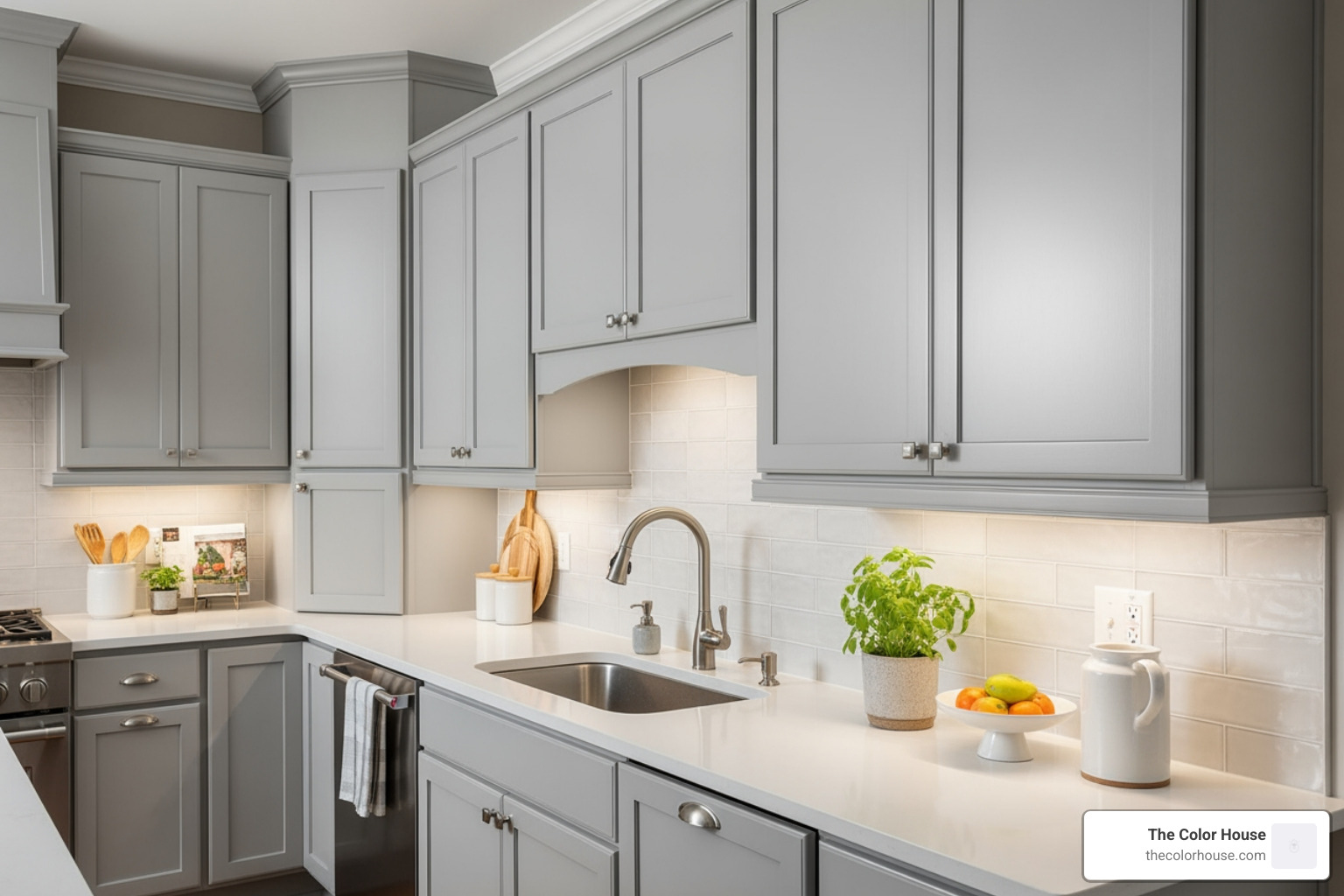
Before you even think about opening a paint can, gather your arsenal of tools and materials. Here’s what you’ll need:
- Screwdriver or power drill
- Plastic bags and a marker for labeling hardware
- Cleaner/degreaser (like Krud Kutter or TSP substitute)
- Liquid deglosser
- Microfiber cloths or lint-free rags
- Wood filler and putty knife
- 150-220 grit sandpaper (sheets, sanding blocks, or an electric sander)
- Painter’s tape
- Drop cloths or plastic sheeting
- Quality primer (bonding or shellac-based)
- Your chosen kitchen cabinet paint
- High-quality brushes (angled, 2-2.5 inch)
- High-density foam rollers (4-6 inch) and roller trays
- Paint project lifters (optional, but highly recommended for doors)
- Utility knife (for scoring tape)
Start by carefully removing all cabinet doors and drawer fronts. This is not the time for guesswork! Label each door and drawer (e.g., “upper left of stove”) and place its corresponding hardware (hinges, knobs, pulls) in a labeled plastic baggie. This meticulous organization will save you immense headaches during reassembly. Then, clear out your cabinets and protect your countertops and flooring with drop cloths.
Step 1: Cleaning, Degreasing, and Deglossing
Kitchen cabinets are notorious for accumulating grease, grime, and cooking residue. If you paint over this, your beautiful new finish will simply peel off. That’s why cleaning is paramount.
First, thoroughly wash every surface you intend to paint with a strong cleaner/degreaser. Products like Krud Kutter are excellent for cutting through years of kitchen gunk. Follow the product instructions, ensuring you rinse thoroughly to remove all cleaner residue. For those stubborn spots, we recommend a TSP substitute.
Once clean, let the cabinets dry completely. The next step is deglossing. A liquid deglosser (sometimes called “liquid sandpaper”) helps etch the existing surface, creating a microscopic texture that the primer and paint can grip onto. This is especially important for previously painted or glossy surfaces. Apply it with a clean rag, following the manufacturer’s directions, and allow it to dry. This crucial step significantly improves paint adhesion and is a non-negotiable part of our process at The Color House.
Step 2: Sanding and Filling Imperfections
After degreasing and deglossing, it’s time to sand. Don’t worry, the goal isn’t to strip the cabinets down to bare wood (unless they’re raw wood, of course!). We’re “scuff sanding” – creating a slightly roughened surface for optimal adhesion. Use 150-220 grit sandpaper. You can do this by hand with sanding blocks, or for larger projects, an electric sander can save you a lot of time and effort. Sand all surfaces that will be painted, including the cabinet frames.
As you sand, inspect your cabinets for any dings, dents, or old hardware holes you won’t be reusing. Now’s the time to fill them! Use a good quality wood filler, applying it with a putty knife. Once dry, sand the filled areas smooth so they are flush with the surrounding surface. This attention to detail ensures a flawless, professional finish.
After sanding and filling, vacuum up all the dust. Then, wipe down every surface with a damp microfiber cloth to remove any lingering dust particles. You want your primer to bond to the cabinet, not to dust!
Step 3: Why You Must Prime Your Cabinets
“Do I really need to prime?” This is one of the most common questions we hear at The Color House, and our answer is always a resounding “YES!” Priming is a critical element for good coverage and a long-lasting finish, especially for kitchen cabinets.
Primer serves several vital functions:
- Adhesion: A high-quality bonding primer creates a strong bond between the cabinet surface and your new paint, preventing chipping and peeling. This is especially important if you’re painting over glossy finishes, laminate, or previously stained wood.
- Even Coverage: Primer creates a uniform base color, allowing your topcoat to achieve its true color in fewer coats. If you’re going from dark to light, or using a vibrant color, a primer (especially one tinted to match your final paint color) will save you paint and ensure rich, consistent results.
- Stain Blocking: Some primers are specifically formulated to block stains (like knot bleed-through from wood or water stains) from seeping through your new paint. For laminate cabinets, a shellac-based primer is often recommended for maximum adhesion.
For most kitchen cabinet projects, we recommend a premium bonding primer. For those challenging surfaces like laminate that might require extra grip, a shellac-based primer is an excellent choice. We can help you choose the perfect primer for your specific cabinet material at any of our Rhode Island locations.
Application Methods for a Flawless Kitchen Cabinet Paint Finish
You’ve done the hard work of prep, now comes the fun part – applying your kitchen cabinet paint! The method you choose can significantly impact the final look, but remember, proper prep is still the most critical factor.
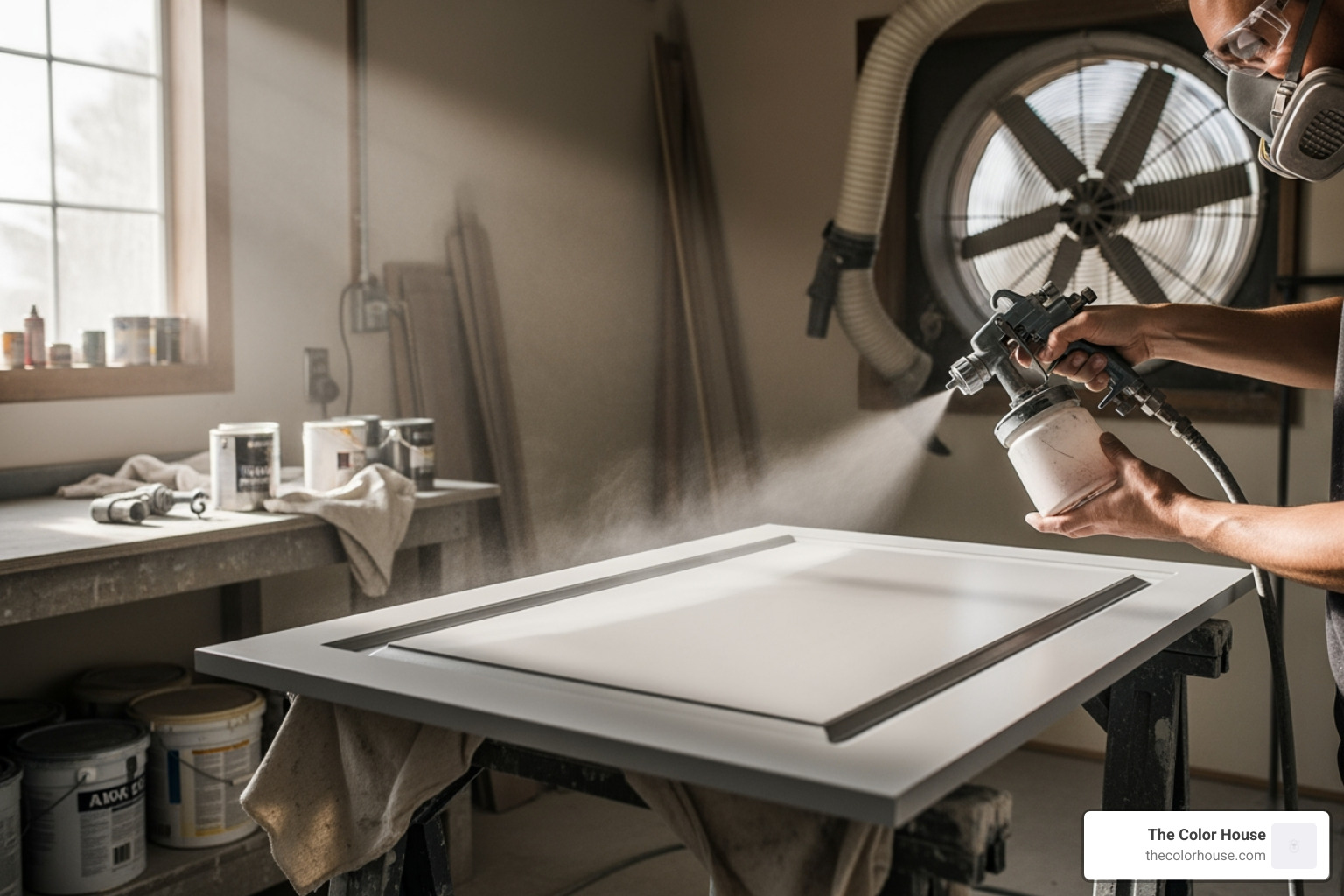
Brush, Roller, or Sprayer: What’s the Best Method?
Each application method has its pros and cons, and the “best” choice often depends on your comfort level, desired finish, and the size of your project.
- Brushing: For cutting in edges and intricate details, a high-quality angled brush (2-2.5 inch) is indispensable. Use a good brush, and you’ll minimize brush marks.
- Rolling: For flat surfaces like cabinet doors and frames, a high-density foam roller (4-6 inch) can provide a surprisingly smooth, almost spray-like finish. Rollers are excellent for applying thin, even coats and are generally easier for DIYers to master than sprayers.
- Spraying: For the smoothest, most factory-like finish, a paint sprayer is king. An HVLP (High Volume, Low Pressure) sprayer offers excellent control and can quickly apply thin, even coats without brush marks or roller texture. While there’s a learning curve, the results can be stunning, especially for large projects like a full kitchen. You can rent a sprayer or invest in a good quality one if you plan on more painting projects. If you’re considering spraying, check out this Guide to Spray Painting Kitchen Cabinets for more tips.
Regardless of the method, the key to a professional finish is applying thin, even coats. Avoid overloading your brush or roller, and always maintain a wet edge to prevent lap marks. If you’re using a sprayer, practice on scrap wood first to get a feel for the settings and technique.
The Painting Process: Coats, Drying, and Curing
Patience, young grasshopper! This is where many DIYers get tripped up, but it’s crucial for a durable, long-lasting finish.
- How Many Coats: After one coat of primer, you’ll typically need two thin coats of your chosen kitchen cabinet paint. Sometimes, if you’re making a drastic color change or using a very light color, a third coat might be necessary to achieve full opacity and rich color.
- Recoat Time: Always refer to the paint manufacturer’s instructions for recoat times. For premium waterborne alkyds like Benjamin Moore Advance, we recommend waiting at least 24 hours between coats. This might feel slow, but it allows each layer to properly set up, preventing issues like flashing or poor adhesion.
- Dry Time vs. Cure Time: This distinction is vital. Paint might feel dry to the touch in a few hours (dry time), but it takes much longer to reach its full hardness and durability (cure time). For kitchen cabinets, full curing can take anywhere from 2 to 3 weeks. During this period, the paint is still hardening and is susceptible to damage.
- Patience is Key: We know it’s tempting to rush, but resist the urge! Avoid putting doors back on or placing items inside cabinets until the paint has had adequate time to cure. Lightly sand with 220-grit sandpaper between paint coats to remove any dust nibs or imperfections, then wipe clean before applying the next coat.
- Reassembly Timeline: We advise our customers in Rhode Island to keep their cabinet doors off and hardware removed for as long as possible, ideally for the full 2-3 week curing period, before heavy use. If you must reassemble sooner, do so gently and handle with extreme care. This dedication to the curing process is what separates a good paint job from a truly professional, long-lasting one.
Frequently Asked Questions about Cabinet Painting
We get a lot of questions about painting kitchen cabinets at The Color House, and for good reason—it’s a big project! Here are some of the most common inquiries we receive:
How much does it cost to paint kitchen cabinets?
Painting your kitchen cabinets yourself is a fantastic way to save money compared to replacing them or hiring a professional. While professional cabinet painting in Rhode Island can cost around $10,000, a DIY project is significantly more budget-friendly.
Here’s a general breakdown of DIY costs:
- Paint: For a premium kitchen cabinet paint like Benjamin Moore Advance, expect to pay $80-$120 per gallon. An apartment-sized kitchen might need about a quart (covering ~140 sq ft), while a larger kitchen might require a gallon (covering ~350-400 sq ft).
- Primer: A gallon of quality primer typically costs around $30. You’ll likely need about half a gallon for a single coat for 350 square feet.
- Supplies: Brushes, rollers, trays, sandpaper, degreaser, deglosser, wood filler, painter’s tape, and drop cloths can add up to $40-$60.
- Tools (if needed): If you don’t already own an electric sander or drill, these might be an additional $50 each, but you can often borrow or rent these.
Overall, a DIY kitchen cabinet painting project can cost you roughly $170-$230 for materials, saving you thousands while still achieving a stunning update.
What are the most common mistakes to avoid?
We’ve seen it all, and we’re here to help you avoid the pitfalls! Here are the most common mistakes DIYers make when painting kitchen cabinets:
- Skipping or Rushing Prep Work: This is the absolute biggest mistake. Not thoroughly cleaning, degreasing, deglossing, or sanding will lead to poor adhesion, chipping, and peeling. We can’t stress this enough: the prep is 80% of the job!
- Rushing Cure Time: As discussed, paint needs weeks to fully harden. Putting doors back on too soon or being rough with newly painted surfaces will result in nicks, scratches, and paint sticking together. Patience truly is a virtue here.
- Applying Thick Coats: It might seem faster, but thick coats lead to drips, uneven drying, and a less durable finish. Always apply multiple thin coats for a smoother, stronger result.
- Using the Wrong Paint: Regular wall paint is not formulated for the demands of cabinets. Always choose a premium kitchen cabinet paint designed for durability, like a waterborne alkyd enamel.
- Not Labeling Doors and Hardware: Trust us, you will forget where everything goes. Labeling ensures a smooth reassembly process.
- Using Cheap Brushes and Rollers: Quality tools make a huge difference in achieving a smooth, professional finish and minimizing brush marks or roller texture.
Do I need to apply a topcoat or sealer?
This is another excellent question! For most modern, high-quality kitchen cabinet paint options, especially premium waterborne alkyd enamels like Benjamin Moore Advance, a separate topcoat or sealer is generally not necessary. These paints are engineered to cure to a hard, durable finish that is washable and resilient enough on its own. Adding an unnecessary topcoat can sometimes even cause issues like yellowing, especially with lighter colors.
However, there are exceptions:
- If you’re using an acrylic paint that isn’t specifically formulated for high-wear surfaces (like some “all-in-one” or furniture paints), a clear topcoat (like a water-based polyurethane) might be recommended to boost durability and protect the finish.
- Always check the manufacturer’s recommendations for your specific paint product. Our experts at The Color House can provide custom advice based on your chosen paint.
Conclusion: Enjoy Your Transformed Kitchen
Painting your kitchen cabinets is a transformative project that can refresh your entire kitchen, adding significant value and appeal to your Rhode Island home. We’ve walked through the key steps: from choosing the right kitchen cabinet paint and sheen, through essential prep work, to mastering application methods and understanding crucial drying and curing times.
The secret to success lies in two core principles: patience and preparation. Don’t cut corners on cleaning, sanding, or priming, and resist the urge to rush the drying and curing process. By following these guidelines and investing in quality products like Benjamin Moore paints, you’ll achieve a durable, professional-looking finish that you can enjoy for years to come.
At The Color House, we’re passionate about helping our customers succeed with their painting projects. We offer competitive pricing, individualized service, and expert advice, making us the personalized alternative to big box stores. Our team is always ready to answer your questions, help you select the perfect Benjamin Moore paint, and ensure you have everything you need for a stunning kitchen change.
Ready to brush up your kitchen? Visit us at any of our Rhode Island locations. Our paint experts are here to guide you every step of the way!