Why Dining Room Drapery Matters for Rhode Island Homes
Dining room drapery serves far more than a decorative purpose—it shapes the entire atmosphere of your space, controls light and privacy, and can even help reduce energy costs. Whether you’re hosting formal dinners or casual family meals, the right window treatments transform how your dining room looks and feels.
Quick Guide to Choosing Dining Room Drapery:
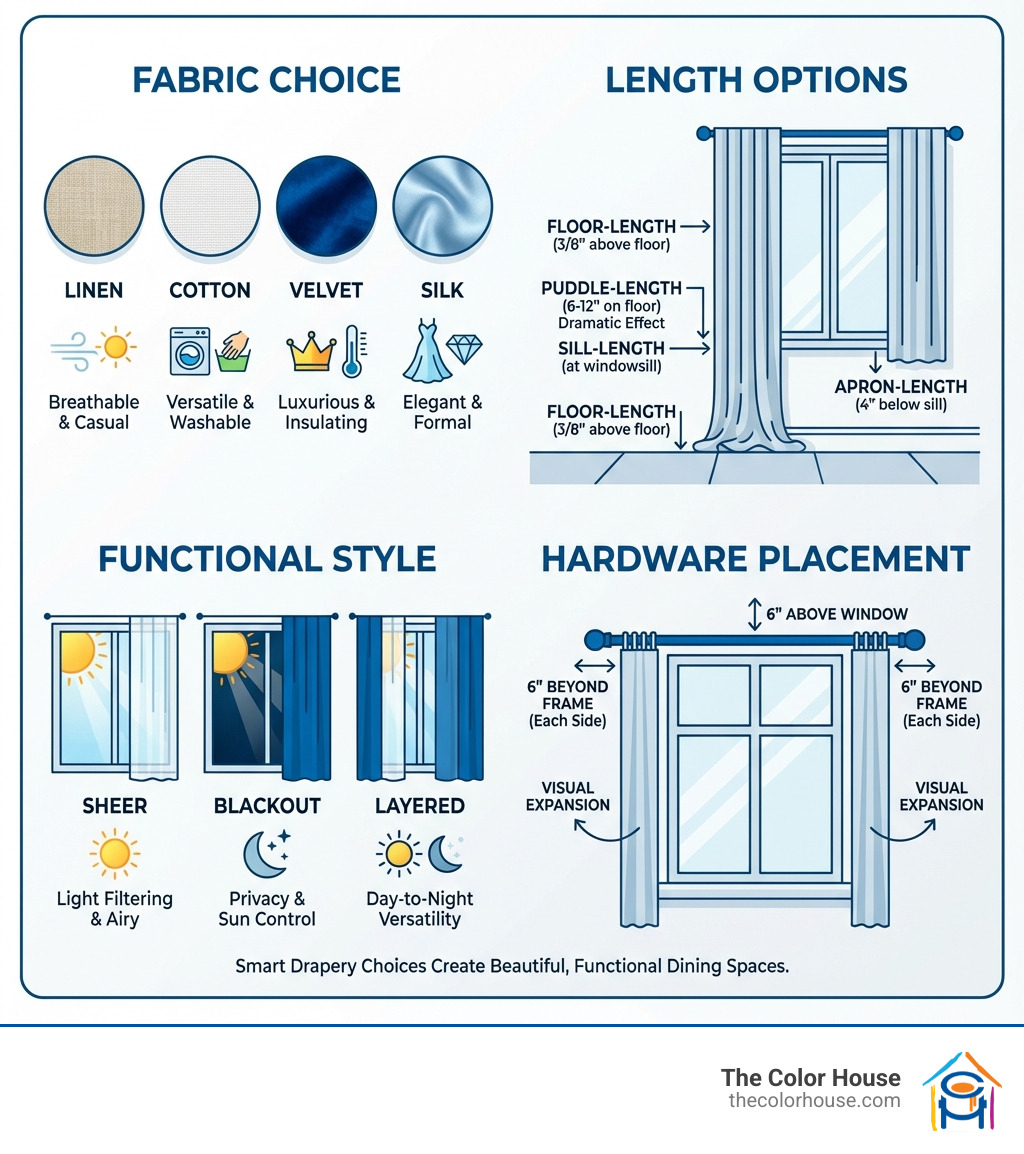
- Fabric – Linen for casual elegance, velvet for drama, cotton for easy care, or silk for formal luxury
- Length – Floor-length for sophistication, sill-length for modern minimalism, or puddle-length for traditional grandeur
- Function – Sheer for light filtering, blackout for sun control, or layered for maximum versatility
- Style – Rod pocket for classic looks, grommet for contemporary spaces, or pinch pleat for formal dining
- Hardware – Mount rods high and wide (6″ above and beyond the window frame) to visually expand your space
With large gatherings on hold during the COVID-19 pandemic, many homeowners neglected their dining rooms. Now, as families reunite and entertaining resumes, there’s renewed motivation to update these long-overlooked spaces. The right drapery can frame your windows like artwork, soften harsh sunlight during afternoon meals, block drafts in Rhode Island’s cold winters, and create the perfect ambiance for any occasion.
As Jean Hauser, owner of The Color House with over two decades of experience in interior design and custom window treatments, I’ve helped countless Rhode Island homeowners select the perfect dining room drapery to complement their style while addressing practical needs like light control and energy efficiency. In this guide, I’ll share everything you need to know to make confident choices that transform your dining space.
The Foundation: Fabric, Function, and Color
Beyond aesthetics, dining room drapery plays several crucial roles in enhancing your home. These are the primary functions that extend far past just looking good:
- Privacy Control: Whether you’re enjoying a quiet family dinner or hosting a lively gathering, drapery can block outside views, ensuring your mealtime remains private. Lined or pleated drapes are particularly effective at night.
- Light Filtering: Curtains allow you to control the amount of natural light entering the room. Sheer fabrics can soften harsh glare and create a pleasant mood, while heavier fabrics or blackout options can block unwanted light entirely, preventing glare on screens or intense sunlight from disrupting your meal.
- Sound Absorption: Fabric has a natural ability to absorb sound. In a dining room, drapery can significantly reduce echoes and dampen ambient noise, creating a more intimate and comfortable atmosphere for conversation. This is especially useful in open-concept homes or rooms with hard surfaces.
- Energy Efficiency & Insulation Benefits: This is a big one, especially for our Rhode Island climate. Draperies provide an added layer of insulation at your windows. Heavy drapes can reduce drafts near windows in winter, helping to contain heat and save on heating bills. Conversely, closing drapes before peak heat in summer can help keep the dining area cooler, reducing the need for constant air conditioning. One homeowner reported an 8% reduction in winter heat loss simply by using layered, lined linen drapes.
| Fabric Type | Ambiance Impact | Practicality & Durability |
|---|---|---|
| Linen | Natural, breathable, casual, unpretentious, timeless vibe | Durable, demand growing due to natural properties, medium weight, can be semi-sheer to opaque, good for longevity. |
| Cotton | Flowing, versatile, can be crisp or soft | Can be heavier than voile, semi-sheer to opaque, good for longevity and easy maintenance. |
| Velvet | Formal, cozy, neat, dramatic, luxurious | Heavy fabric, excellent for blocking drafts, adds warmth, may require professional cleaning. |
| Silk | Neat, formal, luxurious | Fragile, delicate, often requires professional cleaning, adds drama. |
| Polyester Blends | Modern, stunning aesthetic | High-quality, durable, easy maintenance, good for light control, can be fire-retardant. |
| Sheer | Airy, light, ethereal | Filters light, provides daytime privacy, softens glare, often easy to clean. |
Choosing the Right Material
The material you choose for your dining room drapery can dramatically influence the room’s ambiance and how functional the curtains are. Here at The Color House, we’ve seen how the right fabric choice can tie a room together.
- Linen: A popular choice, linen brings a natural, breathable, and durable elegance. Its demand is growing due to its inherent properties. It offers a medium weight and can range from semi-sheer to opaque, providing a timeless, casual vibe that feels both refined and relaxed. Homeowners focusing on longevity and easy maintenance often favor natural fibers like linen.
- Cotton: Versatile and flowing, cotton curtains can be lighter than voile or heavier, offering options from semi-sheer to opaque. They come in a wide range of colors and styles, making them a practical choice for various aesthetics and easy to care for.
- Velvet: For a touch of drama and luxury, velvet is an excellent choice. It creates a cozy and formal atmosphere, helps block drafts, and adds significant warmth to the room. It’s perfect for creating a sophisticated and inviting dining space.
- Silk: If you’re aiming for sheer elegance and formality, silk drapes are unparalleled. They add a luxurious sheen and drape beautifully, though they are more delicate and often require professional cleaning.
- Polyester Blends: Don’t underestimate high-quality polyester blends. They offer durability, easy maintenance, and can create a stunning aesthetic, often mimicking natural fibers while providing improved performance, including fire-retardancy options.
When making your selection, consider how each material interacts with light and how it aligns with your dining room’s overall style, from a relaxed farmhouse feel to a modern, formal setting.
The Power of Palette: Neutrals vs. Patterns
The color and pattern of your dining room drapery are powerful design tools. They can either blend seamlessly into the background or become a striking focal point.
- Neutral Color Palettes: Choosing neutral colors like beige, ivory, or soft grays creates a serene and sophisticated backdrop. These palettes are perennial favorites because they allow other design elements—like your dining table, artwork, or dinnerware—to shine. Neutrals offer timeless appeal and versatility, making it easier to update accessories without changing your entire window treatment.
- Bold Patterns: If your dining room needs a punch of personality or a dramatic statement, bold patterns are the way to go. From graphic designs to vibrant florals or horizontal stripes, patterns add dimension and visual interest. They can create stunning focal points and, when chosen carefully, can echo existing accents in your room, ensuring a cohesive yet dynamic look. For instance, a contemporary dining room might feature graphic patterned curtains in white and gray, paired with a complementary area rug. Deep jewel tones are also making a comeback, adding a modern twist to classic luxury.
The choice between neutrals and patterns depends on the desired ambiance. Do you want a calm, neat space, or a vibrant, energetic one? We can help you explore swatches in your Rhode Island home to see how different palettes respond to your unique lighting.
Mastering the Look: Style, Length, and Your Dining Room Drapery
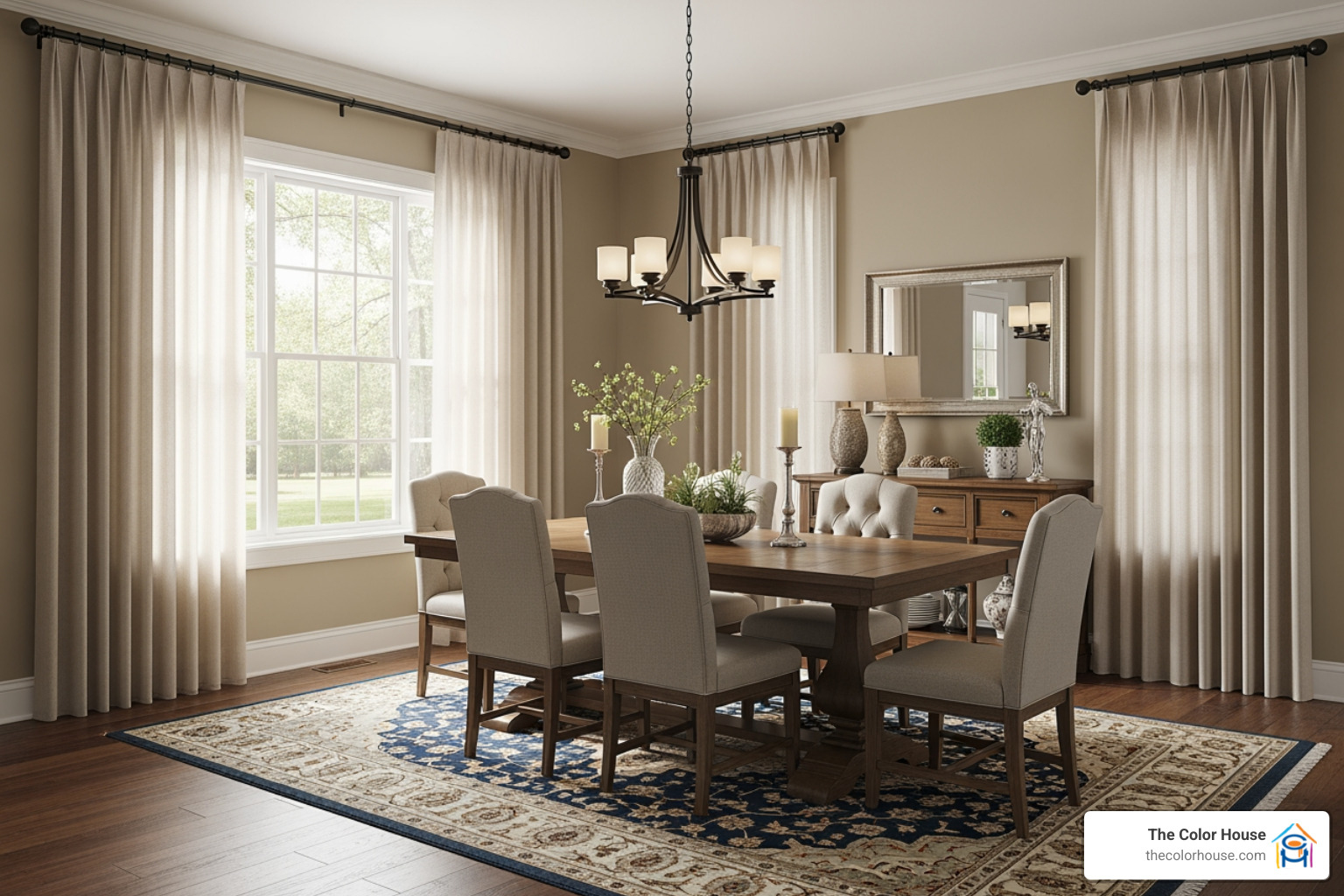
The way you hang your dining room drapery can profoundly impact the perception of space and the overall design of your room. Proper installation techniques can make a small room feel larger or unify an open-concept space.
The Art of Installation: Height and Width
One of the most transformative tricks in interior design is mounting curtain rods high and wide.
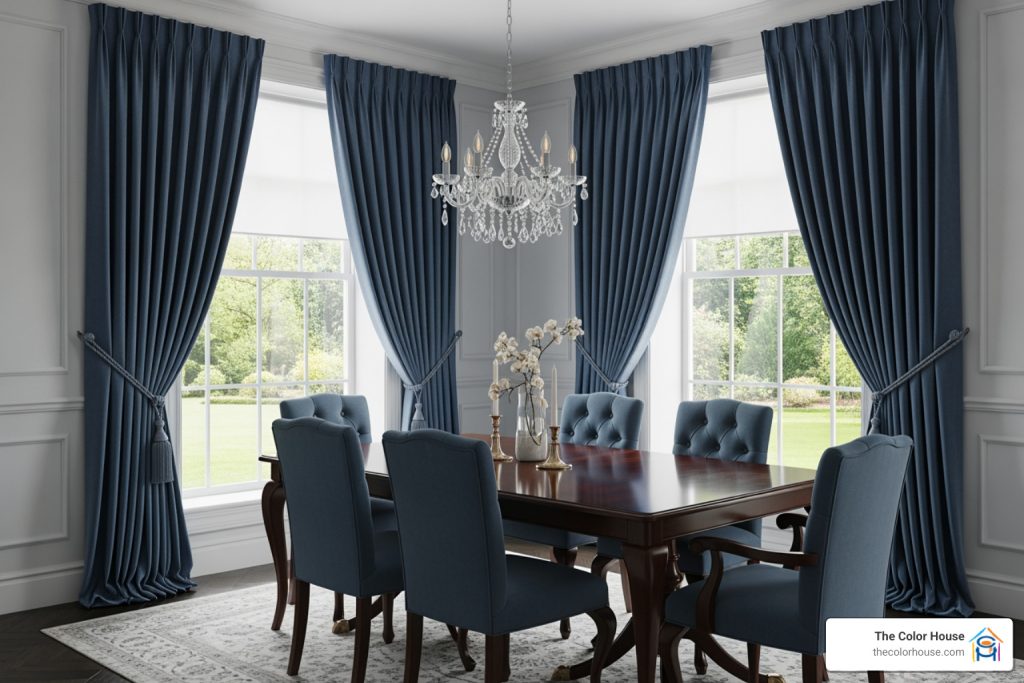
- Mounting Rods High: By installing your curtain rod just below the ceiling (or at least 6 inches above the window frame), you draw the eye upward, creating the illusion of taller ceilings and a more expansive room. This adds instant elegance and can make any dining room feel grander.
- Extending Rods Wide: Extending the rod at least 6 inches beyond each side of the window frame (12 inches total extension) allows the drapery panels to stack back onto the wall when open, rather than covering the window glass. This maximizes the amount of natural light entering your dining room, making the space feel brighter and more open. It also makes the window appear larger than it actually is, enhancing the visual expansion created by high mounting.
For help with precise measurements, we recommend consulting with our experts. Accurate measurements ensure your drapery hangs perfectly, whether you’re aiming for full coverage or decorative side panels.
Finding the Perfect Length for Your Dining Room Drapery
The length of your dining room drapery is a key stylistic decision that impacts the room’s character and functionality.
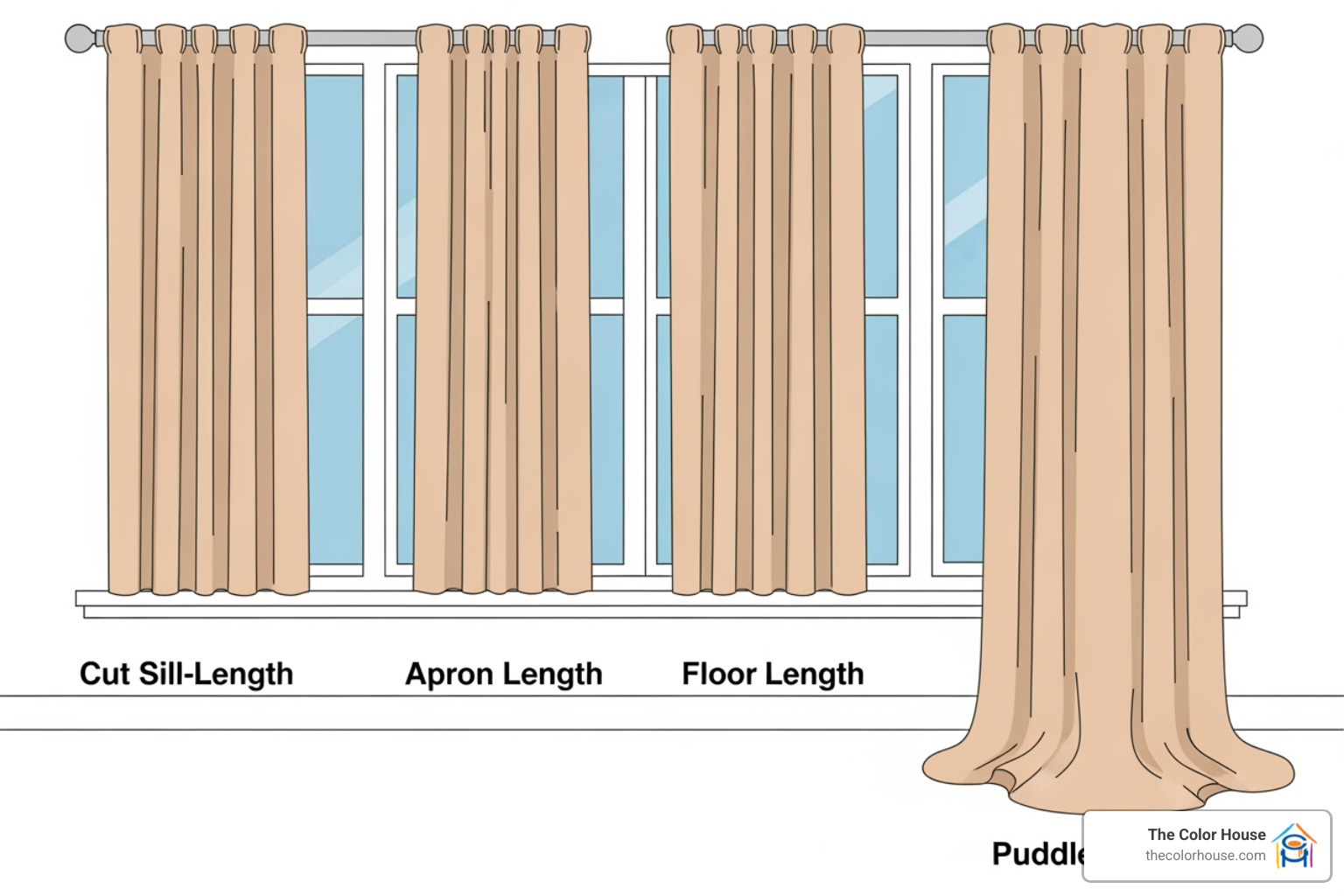
- Floor-Length: This is universally flattering and delivers instant elegance. Curtains should either just graze the floor (about 3/8″ above) for a custom, crisp look, or lightly “break” (1-3 inches longer) on the floor. This length softens the room and makes it feel more inviting, elongating the window and room. It’s ideal for formal dining rooms and frequently used drapes.
- Puddle Length (Pooling): For a more dramatic, traditional, or luxurious aesthetic, allow your drapes to “puddle” or “pool” on the floor (6-12 inches longer than the rod-to-floor height). This style can also disguise uneven floors and adds a touch of romantic opulence, best suited for stationary panels in less trafficked areas.
- Sill-Length: Crisp sill-length curtains (ending at the windowsill) complement mid-century or minimalist furniture and are practical for windows above radiators or furniture. They offer a clean, contemporary look.
- Apron-Length: Ending about 4 inches below the windowsill, apron-length curtains offer a throwback look. They are practical for dining rooms where long curtains might be cumbersome, such as in breakfast nooks or eat-in kitchens, providing a casual yet finished appearance.
Matching the length to your decor style is crucial. A formal dining room often benefits from floor-length or pooling drapes, while a casual breakfast nook might suit sill or apron lengths.
The Role of Curtain Hardware
Don’t overlook the importance of curtain hardware in the overall design and functionality of your dining room drapery. Rods, finials, rings, and tie-backs are not just utilitarian; they are integral design elements.
- Rods: The rod itself can be a statement piece. Trends include brass, matte black, and streamlined acrylic rods. The material and finish of the rod should complement your room’s aesthetic.
- Finials: These decorative end pieces add a finishing touch to your rod. They come in countless styles, from simple caps to ornate designs, and should match the rod’s style and your room’s decor. Finials typically add about 6 inches to each side of the rod, which is important for overall width measurements.
- Rings and Hooks: Rings allow drapes to slide smoothly along the rod, making them easy to open and close. C-rings, for instance, are often used for single-panel pleated drapes. The choice of ring style and material should complement both the rod and the drapery fabric.
- Tie-backs: These functional and decorative accessories hold drapes open, allowing more light in or showcasing the view. They can be simple fabric ties, neat cords, or decorative metal holdbacks, adding another layer of style.
Choosing the right hardware ensures that your drapery hangs beautifully and functions effortlessly, completing the polished look of your dining room.
Unifying Open-Concept Spaces
In many Rhode Island homes, dining rooms are part of an open-concept living space. Dining room drapery can be a powerful tool for unifying these areas, creating a cohesive and harmonious flow.
The simplest and most effective way to unify open-concept living and dining spaces is to use the same drapery fabric, color, or style in both areas. This creates a visual connection, making the entire space feel larger and more integrated. For example, if your living room features natural linen curtains, extending that choice to the dining area instantly links the two spaces. Alternatively, coordinating window treatments, such as using the same hardware style or a complementary color palette, can achieve a similar effect without being overly matchy. This approach helps define zones within the open layout while maintaining a sense of continuity.
Modern Solutions: Trends, Tech, and Sustainability
Modern dining room drapery designs are increasingly shaped by contemporary trends, technological advancements, and a growing emphasis on sustainability. At The Color House, we stay abreast of these innovations to offer our Rhode Island clients the best and most current solutions.
Layering for Versatility and Comfort
Layered curtain solutions are a fantastic way to improve both the functionality and comfort of your dining room. This approach allows for incredible flexibility in light control, privacy, and insulation.
- Sheer Curtains: These inner layers diffuse natural light beautifully, soften glare, and provide daytime privacy while still allowing you to enjoy your view. Sheer curtains with subtle metallic threads can even capture and reflect light, adding to the room’s atmosphere.
- Blackout/Heavy Drapes: The outer layer typically consists of heavier drapes, which can be room-darkening or full blackout. These are perfect for blocking intense sunlight, ensuring complete privacy in the evenings, and significantly improving insulation against Rhode Island’s chilly winters or hot summers. Velvet drapes, for instance, are excellent for blocking drafts and adding warmth.
Combining a sheer inner layer with a heavier outer drape offers the best of both worlds. You can enjoy diffused natural light during the day and switch to full privacy and insulation at night. This day-to-night functionality makes your dining room adaptable to any occasion or weather condition.
Smart Drapery and Sustainable Choices
Technology and environmental consciousness are playing an ever-increasing role in home design, and dining room drapery is no exception.
- Motorized and Smart Controls: Motorized curtains are gaining traction, offering unparalleled convenience and a touch of modern luxury. With the push of a button, a remote, an app, or even voice commands, you can adjust your drapes to create the perfect ambiance for entertaining or a quiet dinner. These systems can be integrated into smart home setups, allowing you to schedule adjustments for energy efficiency (closing drapes during peak sun) or even security (making your home look lived-in while you’re away). For households where accessibility is a concern, ADA-compliant cordless or motorized curtain systems offer safe, user-friendly operation. The growing interest in automated home solutions for convenience and energy efficiency is driving demand for these smart systems.
- Eco-Friendly and Sustainable Fabrics: Modern dining room curtain designs are increasingly shaped by sustainability and wellness trends. We recommend incorporating eco-friendly fabrics certified by OEKO-TEX or using recycled fibers. These materials not only contribute to a healthier indoor environment but also align with a conscious lifestyle, reflecting a growing consumer desire for natural, breathable, and durable options. The U.S. Green Building Council (USGBC) recommends such materials for a healthier home. You can learn more about the U.S. Green Building Council (USGBC) on eco-friendly fabrics.
Practical Considerations: Customization, Care, and Compliance
Choosing dining room drapery is an investment in your home’s comfort and style. Understanding customization options, proper care, and regional compliance ensures longevity and protects that investment.
Custom vs. Ready-Made Drapery
The choice between custom-made and ready-made drapery for your dining room depends on your specific needs, budget, and desired outcome.
- Ready-Made Curtains: These are typically more budget-friendly and offer quicker turnaround times. However, options for fabric, length, and width are limited, meaning you might compromise on fit or specific design elements.
- Custom-Made Curtains: The demand for custom-made curtains is increasing as consumers seek personalized solutions. Custom work guarantees custom proportions and a flawless fit, especially beneficial for irregular windows or expansive glass walls often found in Rhode Island homes. You have access to premium materials, a wider selection of fabrics, and specific lining options (like thermal or blackout) that can significantly improve energy efficiency and even contribute to your home’s resale value, as noted by the National Association of Home Builders (NAHB). Our team at The Color House specializes in custom solutions, ensuring every detail from fabric to pleat style is perfect for your space. We firmly believe in the value of custom work for a truly integrated design.
Care, Maintenance, and Special Requirements
Proper care and maintenance are essential to ensure your dining room drapery remains beautiful and functional for years.
- Best Cleaning Practices:
- Regular Dusting/Vacuuming: Lightly vacuum your curtains with a soft brush attachment monthly to prevent dust buildup.
- Spot Cleaning: Address any spills or stains immediately using a fabric-appropriate cleaner. Prompt action can prevent permanent damage.
- Machine Washable Blends: For easy-care fabrics like many cottons or high-quality polyester blends, machine washing on a gentle cycle is often possible. Always check manufacturer instructions.
- Professional Cleaning: Delicate materials like silk, velvet, or heavily lined drapes usually require professional dry cleaning to maintain their integrity and appearance.
- Seasonal Rotation: If certain panels receive more direct sunlight, rotating them seasonally can help combat uneven fading and extend their life.
- Steaming: For velvet or other fabrics that wrinkle, steaming can help maintain a crisp, neat look.
- Fire-Code Regulations: In certain regions, fire-code regulations require residential curtain materials to meet specific fire-retardancy standards. While specific regulations vary by state (e.g., California and New York have stringent rules), it’s always wise to check with our team at The Color House or local Rhode Island authorities to ensure your chosen materials comply with any applicable codes, especially for commercial or multi-family dwellings.
- Accessibility Needs: For households where accessibility is a concern, ADA-compliant cordless or motorized curtain systems offer safe, user-friendly operation. These systems eliminate cords that can be a hazard and make it easy for anyone to control the window treatments. You can find more information about ADA-compliant systems for accessibility.
Frequently Asked Questions about Dining Room Drapery
We often get asked similar questions by our clients in Rhode Island. Here are some of the most common ones:
Should my dining room curtains touch the floor?
Yes, for a polished and neat look, curtains should either just graze the floor or have a slight “break.” This elongates the room and avoids a truncated appearance. Curtains that are too short can make a room feel unfinished. Hanging curtains that break where the floor begins without hovering above it or puddling will soften your dining room and make it more inviting to spend time in. Sill or apron-length curtains can work in more casual or minimalist settings with specific window types, like in a breakfast nook or over a radiator.
How do I choose curtains for a dining room that gets a lot of sun?
For dining rooms exposed to heavy sunlight, we recommend opting for UV-resistant or lined curtains to protect against fading and prolong fabric life. High-quality polyester blends are often a good choice due to their durability and resistance to UV damage. A layered solution is also highly effective: use a sheer curtain for daytime light filtering and privacy, combined with a blackout or room-darkening panel for blocking intense sun, heat, and UV rays when needed. This combination offers maximum flexibility for light and temperature control.
Can I use curtains to unify an open-concept living and dining space?
Absolutely! Using the same dining room drapery fabric, color, or style in both the living and dining areas is one of the most effective ways to create a cohesive, unified look. This creates a visual flow, making the entire space feel larger and more integrated. It helps to define distinct zones within the open layout while maintaining a harmonious aesthetic. Alternatively, you can use complementary colors or patterns and consistent hardware to achieve a similar sense of unity without being overly matched.
Lift Your Dining Experience
Choosing the right dining room drapery is a thoughtful process that balances aesthetics with practical needs. From selecting the perfect fabric to ensuring proper installation and considering modern technological advancements, every decision contributes to the overall comfort, style, and functionality of your dining space.
We’ve covered how different materials impact ambiance and practicality, the benefits of various color palettes, the transformative power of mounting rods high and wide, and the importance of choosing the correct length. We’ve also explored modern solutions like layering for versatility, smart controls for convenience, and sustainable fabric choices for a healthier home. Finally, we’ve discussed the advantages of custom-made drapery and essential care tips to ensure longevity, along with crucial compliance considerations.
At The Color House, our team here in Rhode Island is dedicated to providing individualized service, expert advice, and the largest inventory to help you steer these choices. We believe your dining room should be a place of joy, comfort, and beauty, and the right drapery can make all the difference.
Ready to transform your dining room into a space that truly wows? Let us help you find the perfect window treatments that reflect your style and meet your functional needs.
Ready to find the perfect window treatments for your dining room?